The Rolling Stone’s song Wild Horses chorus accompanies the alternating heavy rain and drizzle. The heavy rain arrives in surges outside my study window, drumming against the pavement, splattering against leaves, and creating small cascades along the gutters.
The acoustic ballad, with its themes of love, loss, and the complexities of relationships, captures my struggle to publish my writing consistently. I have unlocked a way to write and publish consistently. Short sprints of productivity used to vanish as mysteriously as they had appeared, and these fertile periods elicited no clues as to how or why they happened upon reflection. The key came in three words from fellow writer Steven Foster—First Draft Fridays.
My failed reflections gave way to the image of a wheel. First Draft Fridays is one spoke on the revolution of a writing wheel. The struggle to create something has not gone away, but I have identified my biggest weakness – completing a first draft right before a self-enforced publishing deadline. I was repeating a pattern of cramming for an exam the night before.
I am guilty of wanting to explain the entire universe in every essay. The first wheel spoke on Wednesday night was to select a prompt or an idea. Having an idea or prompt is the first narrowing. I am down to a galaxy or two.
Thursday’s second spoke is to discuss this idea or answer the prompt. I have two approaches.
One approach is to go for a walk with my phone. I will record short snippets of voice, thirty seconds to a minute, into a messaging app. A friend will respond asynchronously with an emoji, written comment, or voice reply. Walking outside works its magic.
A second approach is to get on a call with another person and have them listen to my idea, and I, in turn, listen to their idea. Writer and coach Rik van den Berge calls this an Idea Gym. The gym has three rules. First, listen in silence and hold space for the other person. Second, I reflect on what I hear without adding baggage. Third, I ask questions when I need help understanding something. Watching the other person’s body language and eyes lets me see the exciting parts. Having an idea flop is okay. Frustration can surface what may seem like a lesser idea but becomes a fantastic topic because of that initial conversation. I remember one woman saying after a gym, “Now I have an essay, not a project.”
The third spoke on Friday is what writer Anne Lamont calls the “shitty first draft” in her book Bird by Bird. Translate the compression and distillation of the conversation into written words. I gather evidence for my idea, but there is a better time to run to the library and read a dozen books. Still, I can engage in ambient research with bits of ideas previously captured in a hand-written journal and a digital note-taking application. I like to write the first draft early in the morning so I can step away and see it with fresh eyes in the early evening. Sometimes, I imagine my draft hiding in the woods like a wild beast, a shadow part of myself. I patiently need to coax it from hiding to see the full beauty of its shape. I will share a Google Doc of my draft with a small circle of fellow writers by evening, thus achieving First Draft Fridays.
The fourth spoke is giving and receiving feedback over the weekend. I love the two days of shifting focus to other’s drafts. The weekend is about practicing gratitude. Each person will have different concerns about their writing. Does the flow of the essay make sense? Is there anywhere I could tell less and show more? Seeing what is fantastic and unclear in another’s writing is much easier. We each have blind spots. This practice of providing constructive feedback strengthens my craft.
Monday and Tuesday have the biggest spoke. A good second draft becomes a terrific third draft and, finally, the finished essay. Two days of editing gives me time to take breaks and let my mind process things in the background. I shift focus back inwards, dive in, and tackle the feedback. It is okay to disagree and even not accept a particular feedback, but this is usually a clue that other readers will have similar concerns. I may rewrite the entire essay or rearrange the paragraphs and sentences like Lego blocks. I read my essay out loud several times to hear the rhythm and feel the impact of the words through my breathing.
Wednesday morning is the final spoke. I take a last look at the essay. I may add, change, or remove a word or phrase. I publish at noon and complete one full revolution of the writing wheel.
The rain has stopped; I see the gray, overcast sky outside my study window. The red leaves of a blueberry bush shake like our family’s dog Moo after a bath, and dark pine trees sway to the wind. The writing wheel continues turning.
The song Wild Horses mirrors my determination and passion. This commitment is akin to the unwavering dedication portrayed in the song. Writing necessitates delving into personal experiences, emotions, and vulnerabilities. Sitting at my study desk, I can see these wild horses running, and I can occasionally ride one.
We’re only here for a minute. We’re here for a little window. And to use that time to cater and share shards of light and laughter and grace seems to me the greatest story. I want to write like I’m speaking to you. I would sing my books if I could.” – Brian Doyle
Catholic writer, husband, and father Brian Doyle died on May 27, 2017, at age sixty from brain cancer. He wrote a gospel of the ordinary human life. His final posthumous essay collection, One Long River of Song, holds eighty-one gems written over twenty years.
I arrived early on a Saturday morning in January in the Capital Hill neighborhood of Seattle for the first day of an all-weekend yoga teacher training on restorative yoga. The air was crisp and refreshing, carrying the faint scent of freshly brewed coffee from nearby cafes. The city’s signature mist, common during Seattle mornings, gradually dispersed under the sun’s gentle touch. It wove a dreamlike quality into the surroundings, turning ordinary streets into something magical.
I decided to walk down to one of my favorite bookstores. The scene around me was filled with tranquility and promise. The sidewalk was still relatively quiet, with a few early risers strolling. A cyclist glided past, their wheels whispering on the pavement. The historic white facade of Elliot Bay Book Co. came into view; nestled on the corner of 10th Avenue, the bookstore’s exterior exuded an inviting charm, reflecting the promises of literary exploration within.
The storefront’s large windows, adorned with colorful posters and book displays, were beginning to catch the sunlight, casting a playful dance of shadows onto the sidewalk. Birds perched on nearby trees sang a morning chorus, filling the air with a melodic backdrop. I heard birds sing in the morning to celebrate they survived the long night.
With a last glance at the potted plants and flower boxes adorning the street, I walked up a few steps and was welcomed by the soft creaking of the store’s wooden doors. The smell of paper and ink filled the air as I stepped inside. I took in the rows upon rows of books waiting to be discovered.
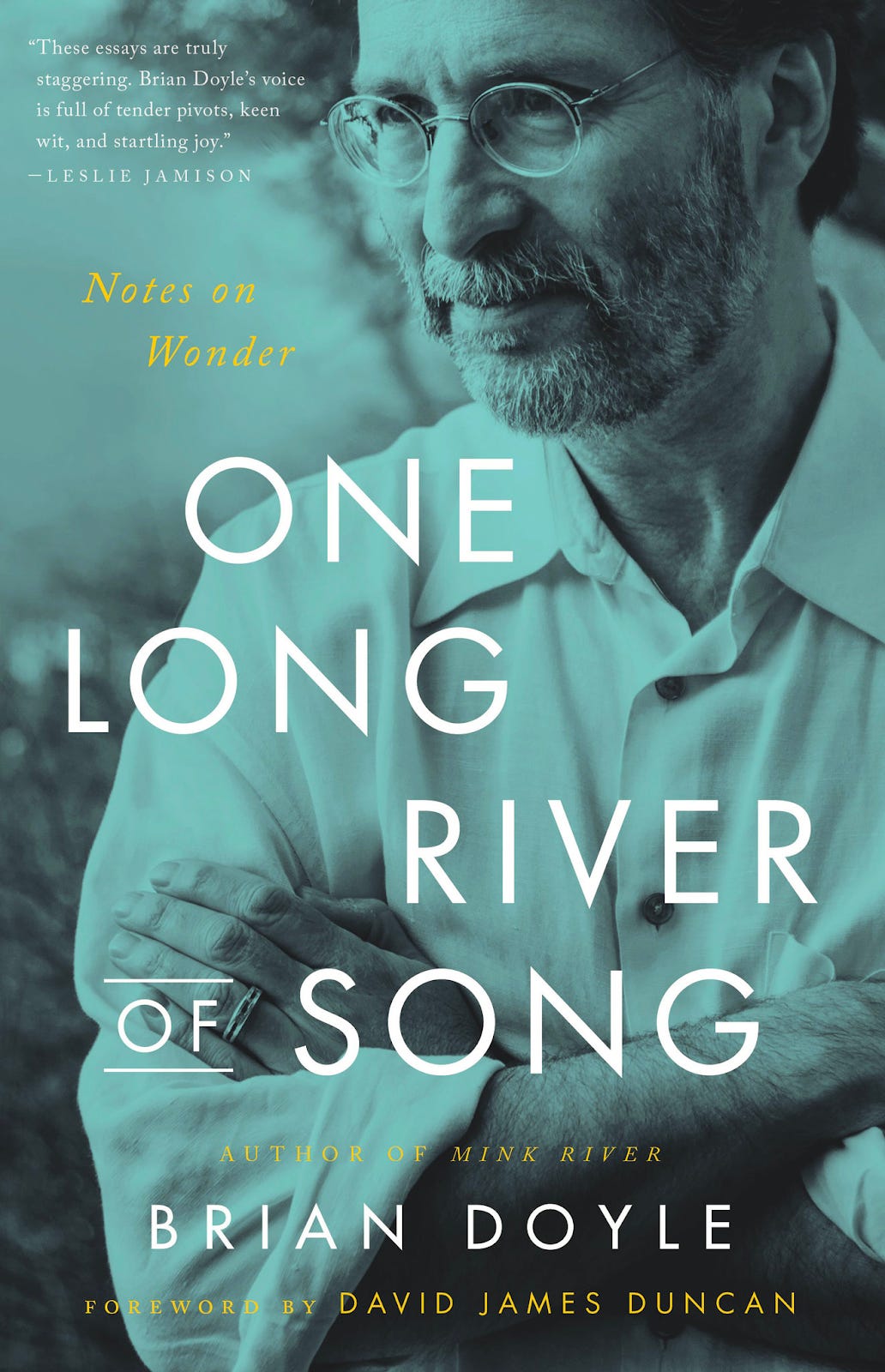
There is a table filled with new books, and a light blue cover with the photo of a spectacled, bearded man caught my eye. His arms are crossed, and he is not looking back at me directly but at some scene off to the side, out of view. The yellow subtitle “Notes on Wonder” caught my eye, and then the title, One Long River of Song. I wondered what is a river of song. Turning the book over, I saw a quote from Mary Oliver, “Doyle’s writing is driven by his passion for the human, touchable daily life and equally for the untouchable mystery of all else.”
I opened the book and stood there reading the opening three-page essay “Joyas Voladoras.” A few minutes later, tears ran down my cheeks. A customer looked at me with concern, and I shrugged my shoulders and pointed at the cover of Doyle’s book as an explanation. Doyle used a biological lens—hummingbird heart, blue whale heart, and human heart—to delve into the broader themes of life, love, and the transient nature of existence.
I bought the book that day, which has been a constant companion for the past four years. I have uncovered a few themes in his writing that resonate with and mirror my life: connection to the natural world, humor and wit, vivid imagination, spirituality and faith, and a sense of awe.
Connection to the Natural World
Nature is central to Doyle’s writing. His deep connection to the natural world is evident in his essays, where he explores the intricacies of the environment, the cycles of life, and the delicate balance of ecosystems. Readers can pause and rekindle their connection to the natural world through his words. “Joyas Voladores” is a beautiful introduction to Doyle’s observational skills.
“Joyas voladoras, flying jewels, the first white explorers in the Americas called them, and the white men had never seen such creatures, for hummingbirds came into the world only in the Americas, nowhere else in the universe, more than three hundred species of them whirring and zooming and nectaring in hummer time zones nine times removed from ours, their hearts hammering faster than we could clearly hear if we pressed our elephantine ears to their infinitesimal chests.”
Outside the window of my study is a blueberry bush. It is November, and the bush’s leaves are red and yellow against the dark green of a pine tree’s needles. I still see the occasional hummingbird hover outside my window, wondering if she might find a last blueberry.
Humor and Wit
Doyle’s essays are often laced with humor and wit. He had a knack for finding humor in the every day, making his writing not only thought-provoking but also genuinely entertaining. His humor serves as a reminder that even in the most serious aspects of life, there’s room for laughter.
The half-page essay “First Kiss” tackles all the concerns you might have with a first kiss, especially if both parties wear glasses. We are right there with Brian, nervous and full of questions.
“Do you hold your breath? Do you aim for staggered breaths like in the pool? And who is in charge?”
I remember my first kiss at age five with Pauline sitting outside our kindergarten classroom and how that led to us riding the school bus home, sharing a seat, and holding hands. Before the kiss, we talked about enjoying our class and found ourselves looking into each other’s eyes. I remember placing my hand behind her head and letting my fingers run through her long brown hair.
In “Irreconcilable Dissonance” he shares all the anecdotes he has collected on divorce from the news and people he knows.
“Another man I read about didn’t want to get divorced, he said, but when his wife kept insisting that they get divorced because she had fallen in love with another guy, he, the husband, finally agreed to get divorced, and soon after he found himself dating the other guy’s first wife; as the first guy said, who could invent such as story?”
A friend once told me the story of her brother getting divorced. The brother and his girlfriend had been dating for five years and finally moved in together upon getting married. One liked to squeeze the toothpaste tube from the middle and the other from the end. They were divorced two months later after a large, extravagant, and expensive wedding in the green Berkeley hills of Tilden Park overlooking the expansive blue of the San Francisco Bay and the iconic red of the Golden Gate Bridge.
Vivid Imagination
Brian Doyle had a remarkable ability to see the extraordinary in the ordinary. His essays are filled with everyday experiences, yet he transforms them into stories of immense significance.
Doyle captures a conversation with a former high school football player nicknamed The Hawk, who is now homeless. The two are sitting together over cups of coffee. The Hawk tells his story.
“The reporter from the paper came by, he said. She wanted to write a story about the failure of the American dream and the collapse of the social contract, and she was just melting to use football as a metaphor for something or other, and I know she was just trying to do her job, but I kept telling her things that didn’t fit what she wanted, like that people came by and leave me cookies and sandwiches, and the kids who play lacrosse at night set up a screen so my tent won’t get peppered by stray shots, and the cops drift by a night to make sure non one’s giving me grief.”
I remember stepping off the bus in the Fremont district of Seattle, thinking about work. A woman leaning against a brick wall screams at me, “You can die!” I kept walking to the office but then paused, turned around, and went back. I asked if she would like a cup of coffee. She is unwashed, smells like urine, and there is a manic darting look in her eyes. We walk together to a nearby cafe, and she tells me about spiders climbing up and down her spine. Sitting at a small round table in the back of the cafe, she tells me about her addiction to methamphetamines. We end up holding hands across the table. She tells me it has been months since anyone has looked at her like she is human. A half-hour later, I head off to work, leaving her at the table with its coffee cup-shaped ceramic vase filled with an aloe vera plant.
“Tigers” tells the story of Brian’s twin sons being born.
“I am standing in the hospital watching babies emerge from my wife like a circus act. First one out is a boy, dark-haired and calm, the size of an owl… Now, says the doctor, reaching around inside my wife while he talks, here’s the other one, and he hauls out another boy. This one is light-haired and not calm; he grabs for a nurse’s scissors and won’t let go and they have to pry his fingers off and the nurse looks accusingly at me for some reason and I want to say hey, I don’t even know the guy, but I don’t say anything, being overwhelmed with new roommates and tears and astonishment at people emerging from my wife one after another like a circus act.”
I remember the birth of my son almost thirty years ago. My wife had wanted to have a natural childbirth without any anesthetics. Her water broke at six in the morning, and we hurried to the hospital in our little grey Toyota Celica. Eleven hours later, my wife was still trying to give birth, and the doctor was telling us that soon she would have to do a Cesarean delivery. A tall football linebacker disguised as a nurse stepped in and, applying pressure with his forearm, told my wife to push. Out he came, and my wife, drenched in sweat, held our son. My wife was radiant and exhausted.
Spirituality and Faith
Many of Brian Doyle’s essays touch on themes of spirituality and faith. He explores the interconnectedness of all living things and often presents a vision of inclusive, accepting, and compassionate spirituality. His writing encourages readers to reflect on their beliefs and consider existence’s profound mystery.
The book of essays closes with “Last Prayer” which finishes with Doyle wishing he, his wife, his kids, and his friend Pete to return as otters.
And if I get one friend again, can I have my buddy Pete? He was a huge guy in this life—make him the biggest otter ever and I’ll know him right away, okay? Thanks, Boss. Thanks from the bottom of my heart. See You soon. Remember—otters. Otters rule. And so: amen.”
I had a video conversation with my father last week. His second wife passed away recently. He told me he does not believe in the afterlife. When we are gone, we are gone, never to return. There is no heaven. He told me a joke about a couple who did not believe in Heaven but would hold a seance a year after one of them had passed to confirm the facts. He told me he did not want to have a conversation about it that would shake his beliefs. My father is eighty-eight. I can respect his wish.
A Sense of Awe
The most captivating aspect of reading Brian Doyle is the sense of awe he inspires. He makes the world feel fresh and new as if you’re seeing it for the first time. His writing reminds me that there is magic in the world waiting to be discovered and that I should approach life with a childlike wonder.
I am glad I took that walk four years ago and discovered One Long River of Song. Reading these essays has allowed me to reflect on my life while sharing a glimpse into the gift of Brian Doyle’s life.
Note: This essay is the result of a one-day writing workshop from rough idea to publish.
In college, I got rid of most of what I owned. I could carry everything I owned in a trailer behind my bike. I did not even own the trailer but borrowed it from friends. I wanted to live in a tent. I wanted to backpack in forests and sleep under the stars beside a mountain stream.
After a class on “Literature of the Wilderness” with poet Gary Snyder, my mind was filled with dreams of being a Chinese mountain hermit or living simply in a Zen Buddhist community. My days would be filled with meditation, walking in nature, and conversation around a shared meal. I loved books, but the university had a library and an inter-library loan system.
A hundred years slip by unnoticed
Eighty-four thousand cares dissolve in stillness
A mountain image shimmers on sunlit water
Snowflakes swirl above a glowing stove
– Stonehouse, China, 13th century
I remembered a story from one of these Chinese hermits a thousand years ago. He is sitting watching a barge on the river filled with the possessions of a rich family. The barge is on fire as the flames dance against the moving dark waters.
The summer after the class with Gary Snyder, I spent a summer studying in Japan, mostly in Tokyo, with a visit to Kyoto. At the university bookstore in Tokyo, I bought a copy of Walden Pond by Thoreau. Reading this essay about living alone in the woods while navigating the bustle allowed me to escape to my hermit’s cave on a remote mountainside.
Later I would marry a Japanese woman and live in Tokyo for six years with our kids in a tiny apartment. Returning to my second home in Seattle, we settled into a house, and I no longer had access to the university library. The local public library was a poor substitute. My wife taught at a Japanese school that our kids attended on Saturday. Saturdays became a day lived in bookstores. Slowly, a single bookcase became a library of 16,000 books. A chance encounter with a board game whose board was a cut-out map of Japan (Reiner Knizia’s Samurai) added board games to these Saturday expeditions. After a few years, I had 3,000 board games, which I would play with a group of friends every Friday night.
Books allow me to connect with the author and his sources. If a book had a footnote, I would hunt down the book and read it. I love Hans Peter Duerr’s Dreamtime: Concerning the Boundary Between Wilderness and Civilization, whose footnotes have footnotes. A five-hundred-page book is only 132 pages of text, followed by footnotes and a bibliography.
I wanted the full context of the argument as if I were engaging in a dialog with the author. One year I subscribed to four science fiction and fantasy magazines. When the annual awards rolled around, I had read most of what was on the nomination lists and even various community lists. I would nod at a choice I agreed with, commiserate about stories of those who missed winning, and even have some favorites that made no one’s list.
Once I was at a local used store, McDonald’s Books, with my friend Steve. “Why are you buying that book?” he asks, knowing I already have a copy of John Wyndam’s Midwich Cuckoos. But this is the first UK hardcover edition, and the cover art is amazing. I could have eight copies of the same book to collect all the covers.
With 16,000 books, I would get the simple question, “Why?” Some would ask how I organized my collection or how it fit in my house. “Have you read them all?” was a common question. I have a shelf of books about personal libraries larger than mine: 60,000 to 80,000. The shelf even includes a book on wooden card catalogs, reminding me of the Dewey decimal system of the university library.
At first, I played every board game I purchased. The urge to collect obscure games and games still in print before prices doubled eventually took over. Small elegant two-player abstract pieces with wood or stone pieces to sprawling beasts like Roads & Boats, which can take over an entire dining room table with both extensions added. What would be the setting for twelve around a Thanksgiving meal becomes a world unto its own, with its board constructed of colorful hexes as you figure out how to manufacture and ship goods with the cleverest routes.
My grown daughter and son-in-law moved back in two years ago. The family room turned library; every wall lined with bookshelves went into boxes and the garage. The garage was already filled with shelves stacked with board games. The family room was a small studio apartment, and there was a need for a walk-in closet in the garage. I found myself donating boxes of books or selling them at used bookstores. I could not donate my board games, and there was no local place to sell them.
The intervention happened after two years. My wife, kids, and son-in-law demanded I get rid of my stuff. We started with selling board games on eBay. My son-in-law took pictures and made the online posts after researching prices. A Battlestar Galactica expansion sold for $250. My wife and I drive to the post office nearly every morning. We enjoy the ride together into town and sometimes shop for food afterward. I love this twenty-minute morning outing with my wife. This week, we started selling books. Seeing a used book sell for nearly a hundred dollars is motivation to sell more.
I still have a shelf of books on minimalism—Mari Kondo, Swedish death-cleaning, and Fumio Sasaki’s Goodbye, Things. That label did not exist in college when I dreamed of being a mountain hermit. Eventually, I will sell them. I look forward to taking a trip with the family from the money earned. Last spring, we all visited Disneyland for four days.
I still love books and board games. I can be a collector even with most of my collection sold. I still dream of being a mountain hermit and love reading those thousand-year-old poems. But time with my family is the most precious of all.
Dear God, please help me navigate this transition in my life. I am no longer standing on firm ground. I am lost, and while taking action, I am unsure of any result. Breathing feels like I am taking air into my lungs but still suffocating. Looking around, I see options, but they are all fake. I want to walk a true path that will not waste my life.
It is 3:00 a.m. I lay in bed under a navy blue comforter, and I could not fall back asleep. I am disoriented in the dark from the dream, and I pray to help orient and ground myself. My whole month has been filled with applying for new jobs and interviewing. After a short prayer, I remember the dream.
In the dream, I am crouching in the back of a delivery van, knees bent, strapped in with a harness. Next to me is a face I recognize from a LinkedIn profile, a potential boss I will interview with next week. He is wearing a hard, dark grey helmet with a GoPro attached. He is checking something on a monitor in front of him that hangs from a ceiling mount. In front of me are two more people strapped in, busy with monitors, and up front, two more people in seats. The driver in one of the seats I recognize as Bill, owner of a bread bakery I worked at 30 years ago. He grins in recognition when our eyes meet. I used to deliver Bavarian rye loaves and sourdough baguettes to restaurants in San Francisco. The early morning light comes into the van as if through stained glass windows. Still in the dream, we drive past San Francisco’s The Painted Ladies, a row of Victorian houses you can find on a postcard, before turning right and heading toward the green strip of the Panhandle and eventually the oasis of Golden Gate Park.
Wayne Thiebaud, Ripley Street Ridge, 1976. Courtesy of Sotheby’s.
My dream evoked a fluid world, not only a kaleidoscope of images but a kaleidoscope of time. Past and future careers were mixed. Lying under the blue comforter, I reflect on my journey in the van. I kept thinking we would jump out and skydive. For a moment in the dream, I saw San Francisco from above, but it was now like a Wayne Thiebaud painting. Layers of oil paint create sunshine and color buildings and streets whose hills you could fall off.
In my everyday awake life, heights terrify me—ski lifts, Ferris wheels, even looking out from a two-story balcony. Solid ground is my place, but my dreams and prayers tell me otherwise. New opportunities will elude me if I only stare at my feet.
Wayne Thiebaud was one of my art teachers before I graduated and started working at the bakery. His paintings went beyond describing a scene—an invitation to live in their evoked world. In one lecture on color, I remember him saying, “Dollar bills are green, but I want the viewer to reach out and take one. I give the dollar an orange undercoat. Now the green pops off the canvas.” He wanted people to try and eat his cake and pastry paintings and feel the vertigo and disorientation of the steep hills of San Francisco streets.
Sitting up in bed after praying and reflecting on the dream, I notice how quiet the house is. The quiet allows me to sit with my thoughts. In the darkness of the room, a quote from the Frank Herbert novel Dune surfaces, “Deep in the human unconscious is a pervasive need for a logical universe that makes sense. But the real universe is always one step beyond logic.” In a few hours, my daughter will wake up. We will walk on frost-covered ground beneath an empty blue sky. We will walk down a narrow path covered with yellow leaves to visit a tree covered in pale, whitish-brown oyster mushrooms inside a green cathedral of trees. I imagine God mailing me a postcard with six colored houses in a row and an encouraging message. I swing my legs over the edge of the bed and slide my feet into brown slippers. I stand on the ground, but I see possibilities, and I am not alone.
Note: I thank my editors Jonny Bates, Chris Coffman, and Shirley Rivera.
The chime of my wristwatch awoke me at 6 a.m., and I sat on the side of my bed, double knotting the laces of my blue Adidas. My roommate groaned, “What the f**k are you doing?” as I stood up and checked I had the dormitory room key in a pocket. “Going out for a run,” I replied. “Why?” he asked as he stared with brows furrowed. “I always do this when I am in a new place,” I answered and quietly closed the door behind me. Now eighteen I had been running every day since I was thirteen and knew it would carry me into this new chapter of my life.
I ran through the campus and took in the different buildings, from brown two-story Victorian buildings (one of which I later learned housed the philosophy department) to low concrete buildings from the old Doctor Who TV show with Tom Baker in his brown overcoat and long striped scarf. As I left the campus, I headed up a main avenue and took in the oak trees and the subdued rainbow of house colors. Only a few cars were driving, and no one was walking—the town’s streets were on a grid.
Six miles and 45 minutes later, I returned to the drab three-story white dormitory building with a mild runner’s high and showered.
Over the weekend orientation, I would learn about my new campus and what it offered, along with several hundred other recently graduated high school seniors. This initial run gave me compass bearings for where I would live for the next few years—grid, small-town, and lots of open space.
After my second year at the university, I had no summer job, and my friends were gone until the fall. I was bored, so I decided to run the circumference of my college town. It was the same preparation ritual as that first run, except there was no surprised roommate. Fields of corn, tomato, alfalfa, and hay surrounded my college town. I could see into the distance until the horizon faded into a grayish blue. Only in one direction were there low foothills.
The town was so flat that the university created artificial hills in front of the engineering building for students learning land surveying. The landscape surrounding the town painted a picture—I lived on an academic island in a sea of agriculture.
The run ended up being 33 miles or 50 kilometers, the furthest I had ever run. Arriving home five hours later, I was pleasantly tired but no longer bored.
The summer after my third year at university, I went to Tokyo for an anthropology program. Unlike the grid of my college town, early mornings became a choose-your-own-adventure run through a maze of neighborhood streets. Tokyo was built to confuse invading towns. I imagine samurai armies becoming lost amidst the tile roofs and colorful kanji shop signs. The quiet was refreshing since I knew how busy the streets would get later.
Returning home to the university from Tokyo, I wanted to continue the adventure and add a challenge. I remembered a childhood dream to run across the country, so I joined the university cross-country team in the fall. The daily practice was simple and familiar. Run eight miles twice a day. In a year I could cross the United States and go back—reach New York City and return to Davis, an hour north of San Francisco.
One night, I remember running under the full moon and my friend Paul pacing me on his bike. He was getting his Ph.D. in math and told me about the three-dimensional shadows cast by higher-dimensional shapes. I shared stories from my Native American Studies classes—how a place is alive and can teach you everything you need to know through stories passed down by those living there.
My running abruptly halted when I developed Achilles tendonitis. The pain of the swollen tendon made it challenging to walk for six months, and I could not run for an entire year.
After half a year of not running I needed an adventure that summer. I grabbed my sleeping bag and topped the stuff sack with nuts, two apples, and a water bottle. I walked to visit those foothills that had been so clear on that summer day that I ran around the town. After an all-day 25-mile hike, I reached the nature preserve owned by the university. I explored a stream and felt the peeling red bark of manzanita trees. Climbing onto a cluster of boulders at sunset, I looked back toward town. The next day, I simply woke up and hiked the return journey.
The next day in town, a fellow student said he had seen me and thought I had decided to leave school and walk into a new life.
I had been running daily for a decade when I graduated college. I had grown from a child to a young man. Running helped me navigate these years and make sense of the world. Running the town’s perimeter and its various streets grounded all the knowledge I had gained from five years of academic study. I was confident I could handle whatever adventure came next because I had a daily running practice.
Note: Thank you editors Shirley Rivera, Jack Dixon, and Sandra Yvonne. Thanks to Cam Houser who gave me useful suggestions for an earlier still unpublished essay on running.
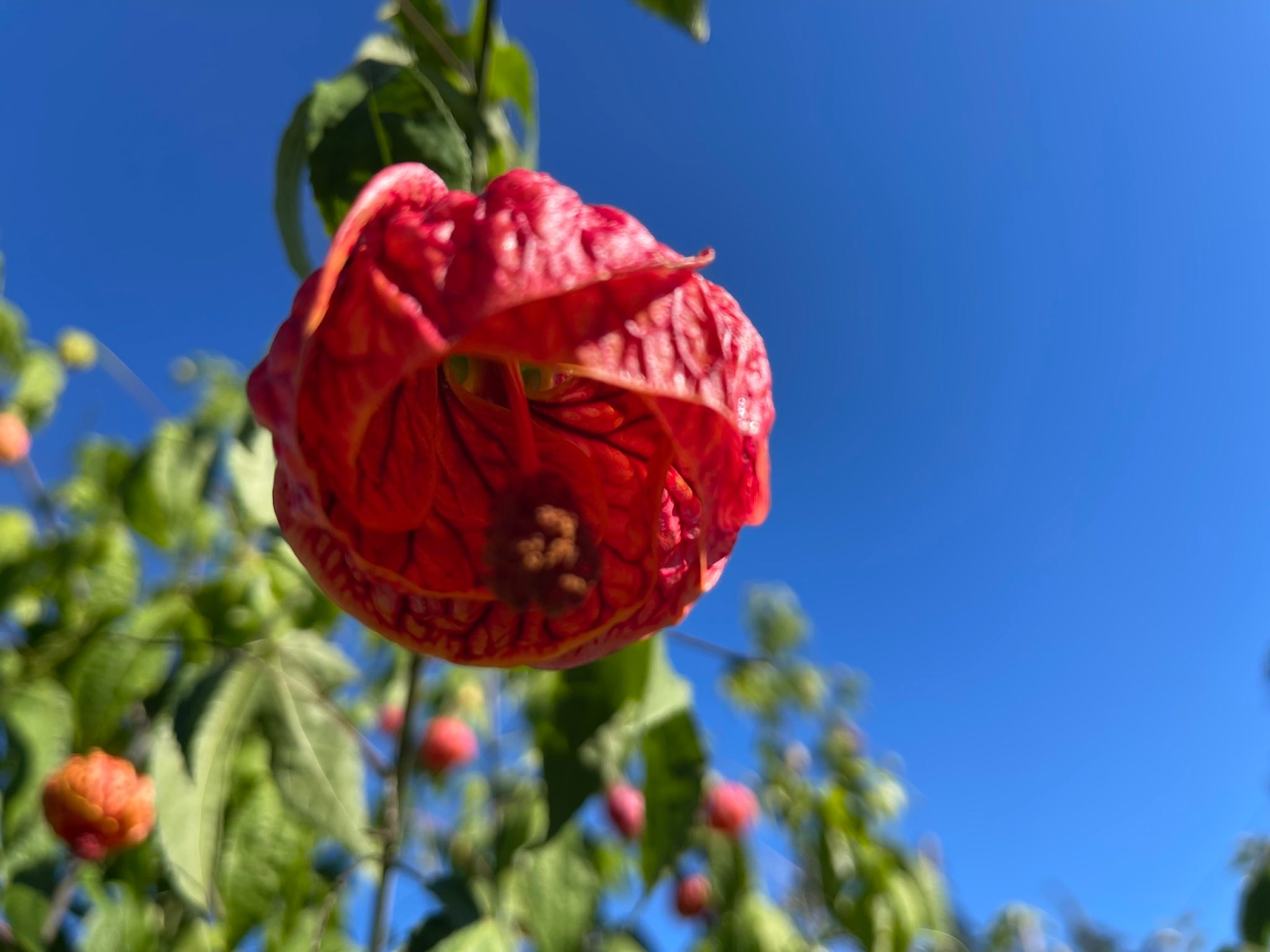
I walked two miles today to see if some flower blossoms were still hanging from a bush. I crouched down to look up inside. They are like red umbrellas against a green background. I was curious if they were still there or had fallen, and I would have to wait until next season to meet them again.
These blossoms are one of many plant buddies I like to visit.
Photo by author
I am unlike my mother, who could recite the botanical name of nearly any plant she ran across. She was not a botanist or a gardener but had still learned their names. Do we still see the actual thing once we have put a name to it?
I have given nicknames to several trees near my home. Dragon Tree greets me with the knot of his wakeful eye, lichen underbelly, and moss and fern back. Has Dragon Tree given me, his frequent visitor, a nickname? Once, when I visited, a tiny mushroom was growing on his back. She was smaller than my pinky finger. I came every day and even convinced my grown daughter to visit. One day, small tears were in the mushroom’s back, and I knew the mushroom would soon be gone. I came home crying the day she disappeared. We would never meet again.
Mushrooms are the fruit bodies of vast mycelium root networks. The red flowers began life in underground roots. Do my plant buddies have minds? I wonder about the consciousness of my plant buddies. How do their senses differ from mine?
Mycelium networks commonly spread over several acres and can be hundreds of years old.
Groves of aspen trees are not a collection of individual trees just living in proximity. They are a community. They communicate and share water and information through a complex underground root system.
Pando, the aspen colony in Colorado, might be the oldest living being on Earth at 80,000 years old.
Archaeologist Christopher Henshilwood made a discovery on his grandfather’s land—a geometric design drawn in a cave overlooking the Indian Ocean 77,000 thousand years ago. This drawing in the Blombos Cave in South Africa is sixty thousand years older than the famous Lascaux cave drawings.
Drawing on a cave wall is a very human thing to do. What did this ancient person see looking out from this cave on a limestone cliff? Who were his long-ago plant buddies? What if this person could have seen Pando across the ocean, and today, Pando could have shared about their long-ago cave buddy?
Crying in response to the little mushroom reminds me of crying in the back of a red VW bus my mom is driving. I am seven years old. She had driven me to visit a friend, and the person who greeted me at the door said the family had moved. The felt sense of that cry from fifty years ago is like this recent one. The fact that I can hold them both, feel and compare them is mysterious. I have other crying experiences, but this is for a lost friendship.
We sleep and dream at night. Where do we go when our consciousness dissolves? How and from where does consciousness return after we awake? Do my plant buddies sleep and dream? Buddhists call the background of the mind storehouse consciousness. Psychologist Carl Jung calls it the unconscious. Modern physicists call it dark matter.
Our minds are much more mysterious and complex than they seem, the tips of a vast iceberg.
We cannot directly observe the unconscious; otherwise, it would be conscious. If we only had consciousness, there would be a ceaseless stream of disconnected experiences without any narrative structure to connect them. We are a story we tell ourselves based on a reservoir of experience we accumulate through life. What stories do plants tell and share?
If our consciousness and dreams sink into and grow in our unconscious, does our unconscious also dream and sink into a deeper unconscious? Jung called this the collective unconscious. Is this only the domain of humans, or do we share this shadow realm with animals and plants?
Photo by author
I stepped off the main trail on one walk to escape the rain. This new trail descends into a ravine. Growing in the trail were two tiny mushrooms together—memories of the Dragon Tree. I push a stick into the mud and lean a leaf against it to get a photo. I show the photo to my daughter, and she says, “It’s you and grandmother.”
Out walking and visiting my buddies I will find myself asking them questions. I listen to the questions they ask me. My ears do not hear words they speak but some part of me listens.
Note: Thanks to Shirley Rivera for editing and the emoji responses to my voice chat messages. Thanks to my other editors Rahul Sanghi and Samantha Law for letting me know what resonated and should be cut.
I also want to thank Raksha Joshi and Jade Barclay for their honest responses to my initial three ideas. (They bombed.) Jenny Herald, thank you for listening to my second try at pitching an idea.Thanks to Christin Chong for listening to my voice chat messages and taking an impromptu call.
The sun is out in Issaquah, a small town east of Seattle. I head out from the office for a lunchtime walk to see Jakob Two Trees, a 15-foot-tall troll holding onto two trees. I see Jakob’s face and his necklace of birdhouses. Kids and adults are all there watching and photographing the troll. We are a community of troll lovers.
The artist’s father told him as a child to make the world a better place than when he entered it. Walking back, I watch people’s faces approaching the troll. Are they visiting again like me, or is this their first time?
My employer laid me off the next day in a video call that seemed less than a minute. The company had hired for a project that evaporated. I discovered later they let several others go. I was laid off eight months ago from a job I had for seventeen years. I have quit many jobs but never imagined this. Now, it has happened twice. I take the rest of the day off but cannot sleep that night. I get up and start my day at four in the morning.
The house is dark and quiet – wife, son, daughter, son-in-law, dog, and hamster are all asleep. I put on headphones and listened to a podcast on a shamanic approach to trauma. In Tibet, they have a tradition of helping someone who has experienced something traumatic, such as an accident or a divorce. They say the person has experienced soul loss. In a car accident, your body cannot physically leave, so a part of you, a piece of your essence, may flee the event. In this act of protection, a part of you goes into a world outside of time and becomes lost.
The Tibetan shaman performs a soul retrieval ceremony by shaping a deer out of clay and placing it on a small wooden boat. The shaman puts it into a pond. As the boat floats away, the shaman follows it into a non-ordinary reality to retrieve the lost soul part. After the shaman returns, the shard is integrated and sealed with a piece of turquoise. Turquoise was my mother’s favorite stone.
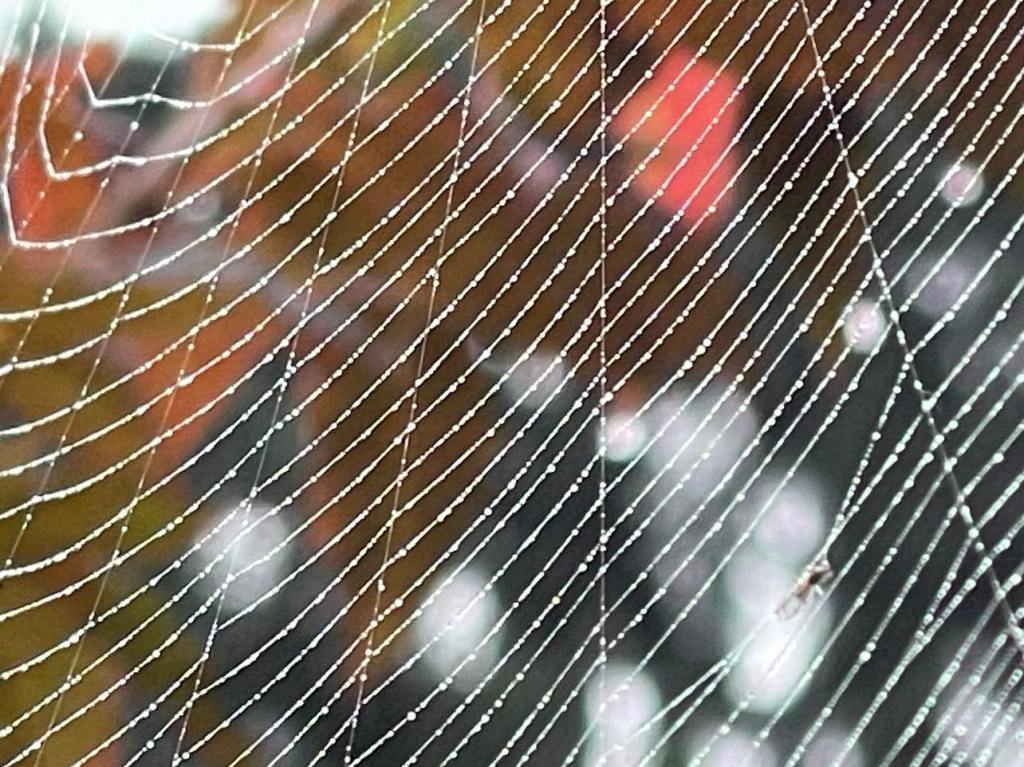
Photo by author
Later in the morning, my wife and I pull out the three trash cans – waste, recycling, and compost. We stand on the front porch, and she says, “Look at the spider.” It had started to weave a web. The spokes were there, and several rings were in the center. The outer ring was complete, as were several anchoring threads to a blueberry bush and the porch railing. The spider is now weaving from the outside and has completed three outer rings.
A few hours later, I checked on the web. It is complete, and the spider is there in the middle.
The troll, Jakob Two Trees, is built from recycled materials. The artist made something beautiful from waste. I am rebuilding a part of my life. The boat is about finding guidance and direction. The web is about connection but also getting or grabbing things.
A friend texts me, “How did you become you?” This question seems way too broad, but in a small way, I am answering this question. The question is a Zen koan. There is no one answer. There is only contemplating it and attempting an answer.
Note: Thank you to Christin Chong for her koan and Shirley Rivera for her support. I appreciate the listening space that Danny Oak held as I told him the story. Thank you to Dekera Greene Rodriguez for facilitating the Idea Gym space and Miche Priest for being vulnerable in sharing her story, which gave me the courage to share mine.
I once met a guy with only one arm. But I had no idea. I thought he had both arms.
The guy with the missing arm and I sat together daily at a cafe one summer in 1987. I was in college and his older brother had introduced us at a party. By this time I had decided on getting an art degree after four years of studying everything and changing degrees several times.
Jerome always wore a flannel shirt over the t-shirt underneath. He was soft-spoken with blue eyes and a shy smile that drew me in. I wanted to be his friend from the moment I met him. Sitting there over coffee it felt like we spoke for hours about everything. Jerome had a presence. He grounded the space we were in.
Sometimes we sat in silence. Jerome liked to sketch and doodle in his journal. I loved to read and was in the middle of Henry Miller’s Big Sur and the Oranges of Hieronymous Bosch. We found natural pauses to talk about life. Yes, maybe that’s what I liked about him. We both sensed that the world was full of adventure.
Jerome was only there for the summer, visiting his brother. We both sensed this season of friendship would end. Knowing this we hung out together nearly every day for the next eight weeks.
I had a summer job a few blocks away from the cafe. It was not full-time and after work I would find a table outdoors, either joining Jerome or waiting for him to arrive.
I had other friends and some of them were around for the summer. None of them knew Jerome. Many of us knew his brother though.
Arriving at the cafe one day I saw Jerome already sitting there sketching. Three of my friends waved me over to their table before I could join him. One of them asked me if I knew why Jerome only had one arm.
“Huh?” I asked in disbelief.
“He has no left arm,” one of them answered as if to prove a point.
“He’s missing an arm? Really?” I replied as if my friends were lying or pulling a gag.
Looks of surprise on three faces. One looked at me as if I was blind and said, “He only has one arm dude!”
My look of puzzlement continued.
“You mean you don’t know? How could you not know?” another friend asked.
“Well, I will go ask him,” I answer and head over to Jerome’s table.
Sitting down, our eyes meet. “I have a question,” I say.
“Ok,” is all Jerome says.
I am looking now at the long sleeve flannel shirt and the left arm is clearly missing. I cannot believe my eyes. “What is going on?” I silently wonder.
Taking a breath I lead with, “Until a moment ago when some friends pointed it out I never knew you were missing your left arm. They want to know what happened.”
His head nods and he leans back in the white plastic chair.
“It was really stupid. I had decided to hop on a moving train. When I reached out to grab a handle the force was so strong it ripped my arm right out of its socket.”
We sat there eye to eye for a few seconds.
We all do stupid things in our life.
A flash image of me at six years old showing off to Toni, the girl across the street.
I am braced in a reverse tabletop on two low brick walls in her yard. I told her I could remove my hands and put them back before my head hits the wall. A gleam in her eyes egged me on. I failed. I walk calmly home and into the kitchen where my parents are entertaining guests. “I have a problem,” I said. They all look puzzled. I reached my hand up to my hair and turned the palm to them. It is covered in blood. An emergency room trip and six stitches later I was fine.
No stitches could fix Jerome.
“I’m sorry man,” I say
He shrugs and says, “It happened.”
Jerome had such composure and grace. That is what I remember from that summer. Sometimes we struggle to get hold of so much in our lives. You may think or worry about your impact on this world. I carry his story 35 years later.
Note: A big shout-out to Cam Houser who first heard me tell a part of this story in his wonderful Minimum Viable Video course. Today he asked me if I had told this story in writing. Here you go.
My introduction to the shamanic underground of Port Townsend began one summer weekend in 2019.
Daily Morning Yoga
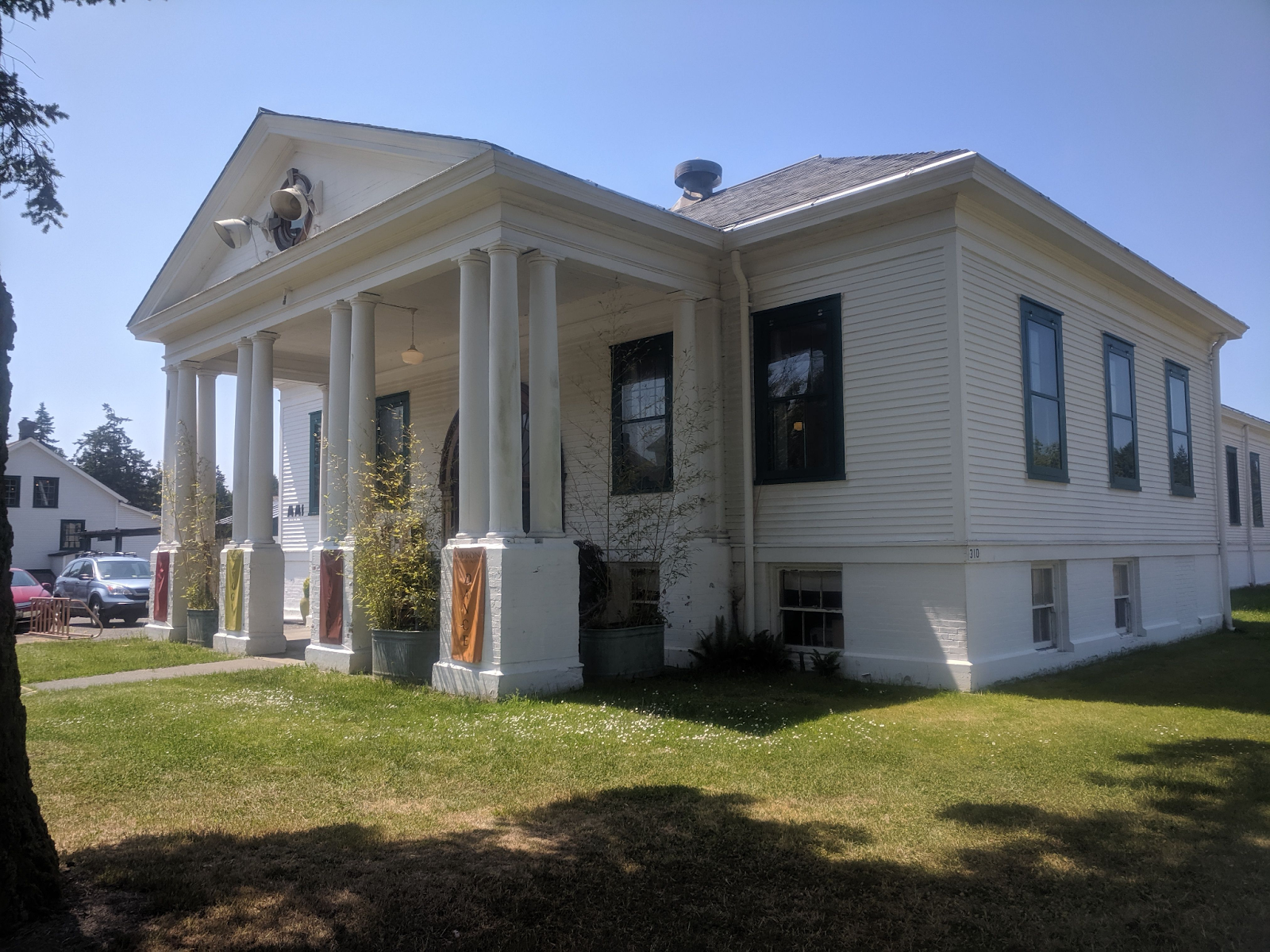
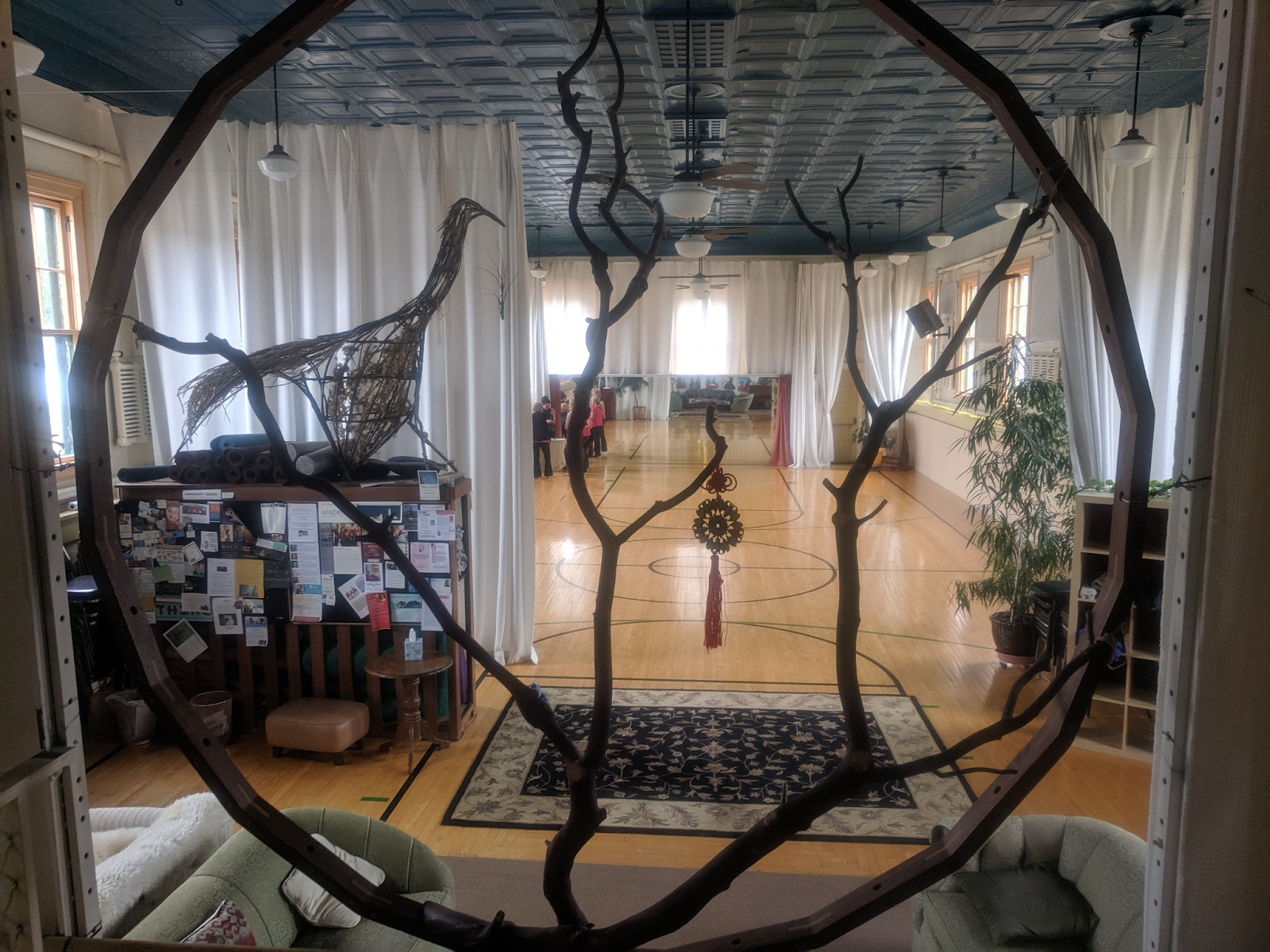
Every morning I went to a yoga class at the Madrona MindBody Institute in a converted-for-the-community military building at Fort Worden State Park. The class helped me stay positive while taking care of my mom in Port Townsend – a town not too far away from Seattle, Washington.
Photo by author
One day after class as I was putting on my shoes I noticed a flier for a Summer Transformation Workshop. The image of Heather Gatto half-hugging a tree with a bit of mischief in her eyes made me want to learn from her.
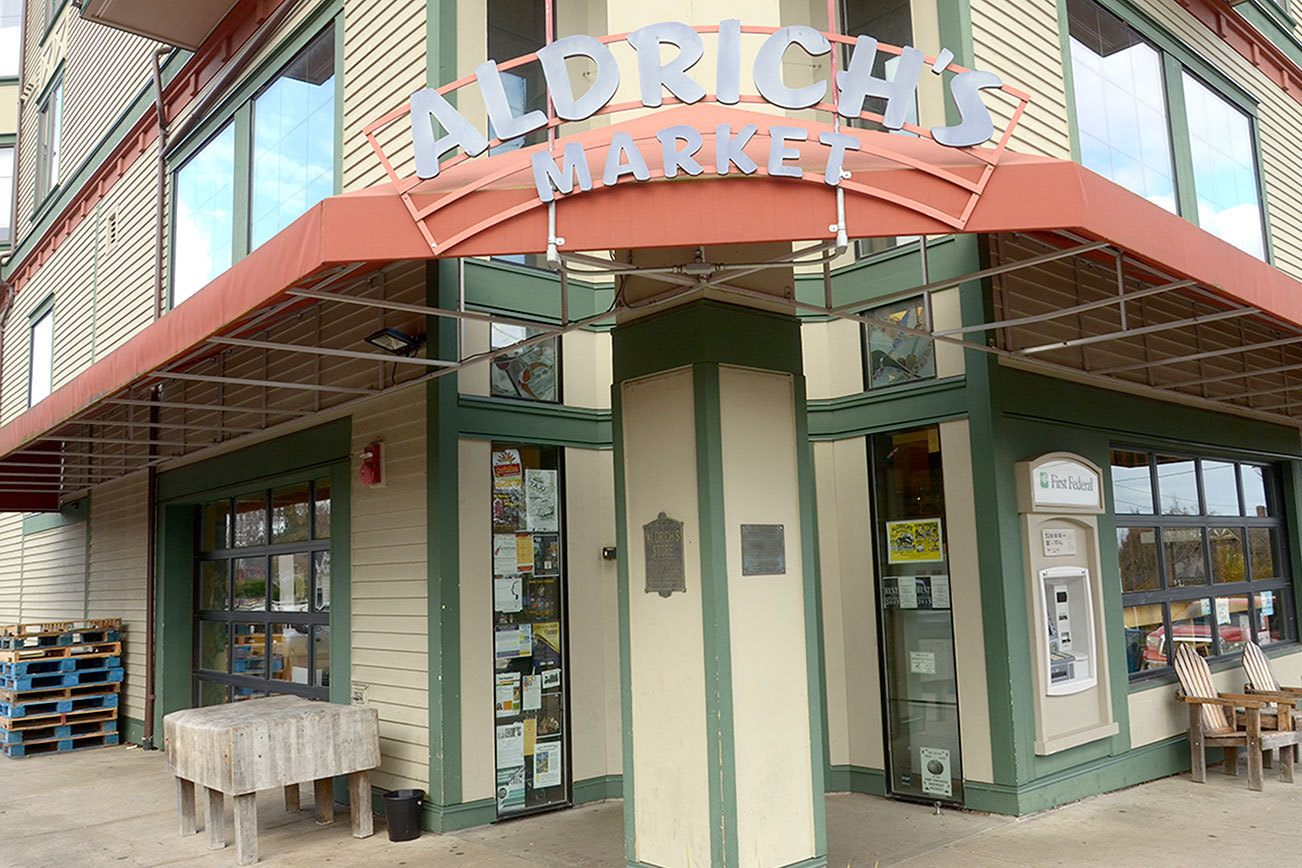
After class I take a short drive to Aldrich’s Market in uptown. Sitting outside in a wooden chair in the morning summer sun I thought about the workshop over a cinnamon roll and a cup of black coffee
I was surprised because the workshop combined yoga and shamanism. I had no idea what shamanism was. I had a memory of a black and white photograph of someone sitting on the ground wearing animal skins playing the drum with their eyes rolled back in their head. I would be jumping into something with no idea of what I was getting into – exactly how I had started yoga.
I talked with my mom about it and her curiosity and enthusiasm helped confirm my initial spark of interest.
“You have always seen the world in a different way since you were a child. You want to do it and that is enough. You do not have to justify your dreams,” my mom said.
I nod my head.
“Do not worry about what others think. Some people live such narrow lives and then they die with regrets,” she continues.
Maybe I have been raised by a shaman? Or is this just the wisdom of old age?
Workshop Day One Morning
Photo by author
I arrived at the institute on a Saturday – a two-story Victorian house with polished wooden floors – with only my yoga mat, a journal, and a bottle of water. We are downstairs in a large room that once served as a pharmacy and a dancehall for the soldiers. The workshop opens with us arranged in a circle on our mats to learn a song. We sing several rounds.
I feel grounded in familiarity as we shift into the asana movement of yoga.
After some yogic breathwork, experiential shamanism began. We laid down on our yoga mats and closed our eyes. Heather explained that we would journey to the lower world to meet an animal guide while she played her drum. I felt a sense of being outside of time in some eternal space as I listened to the rhythmic beat. All thoughts of “will this even work?” had vanished. I found myself on a beach greeting a playful raccoon who was excited to be my friend and guide.
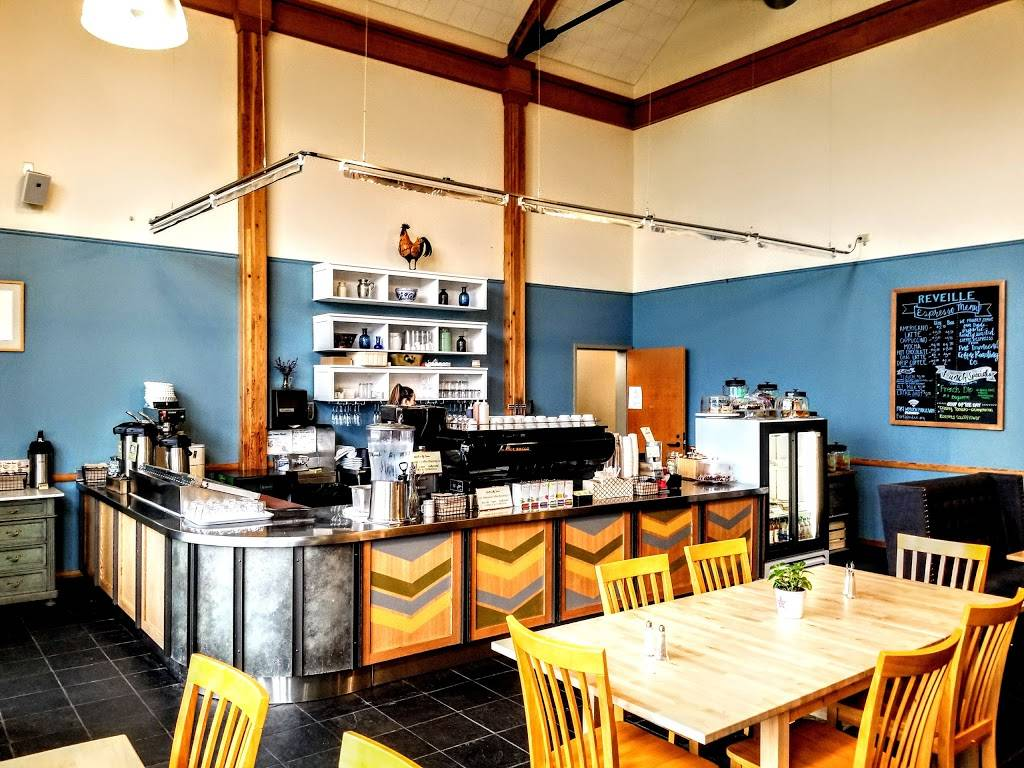
We all walked over to the Reveille Café for lunch, a cozy room with a dozen tables. Over soup, salad, sandwiches, and tea we got to know each other a bit. I had no idea that close friendships would form with those sitting at that table.
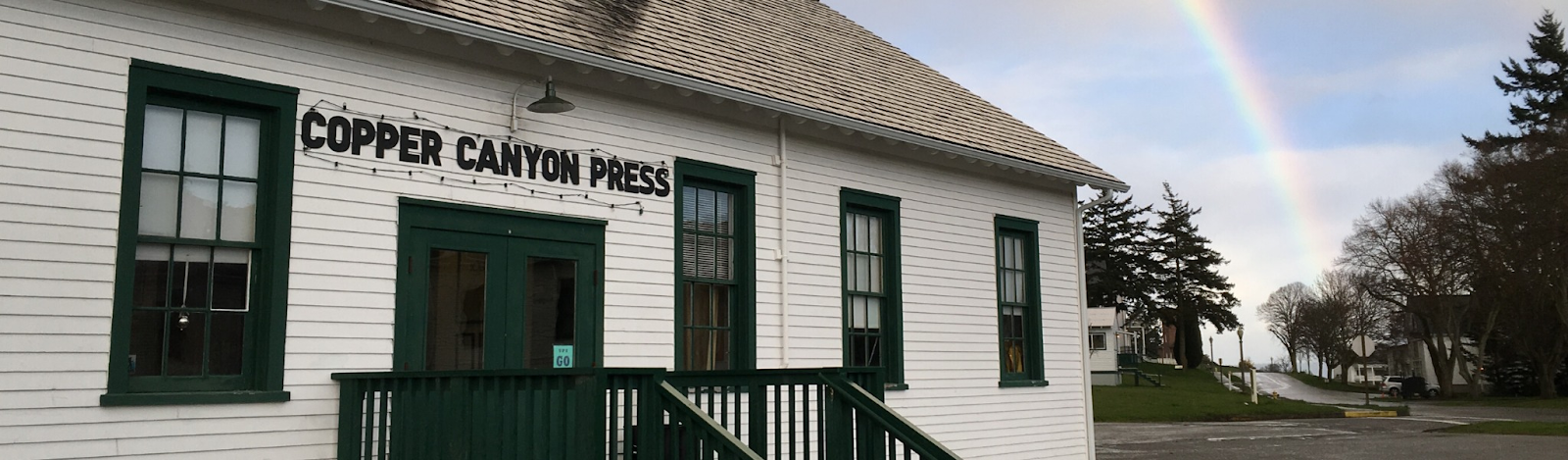
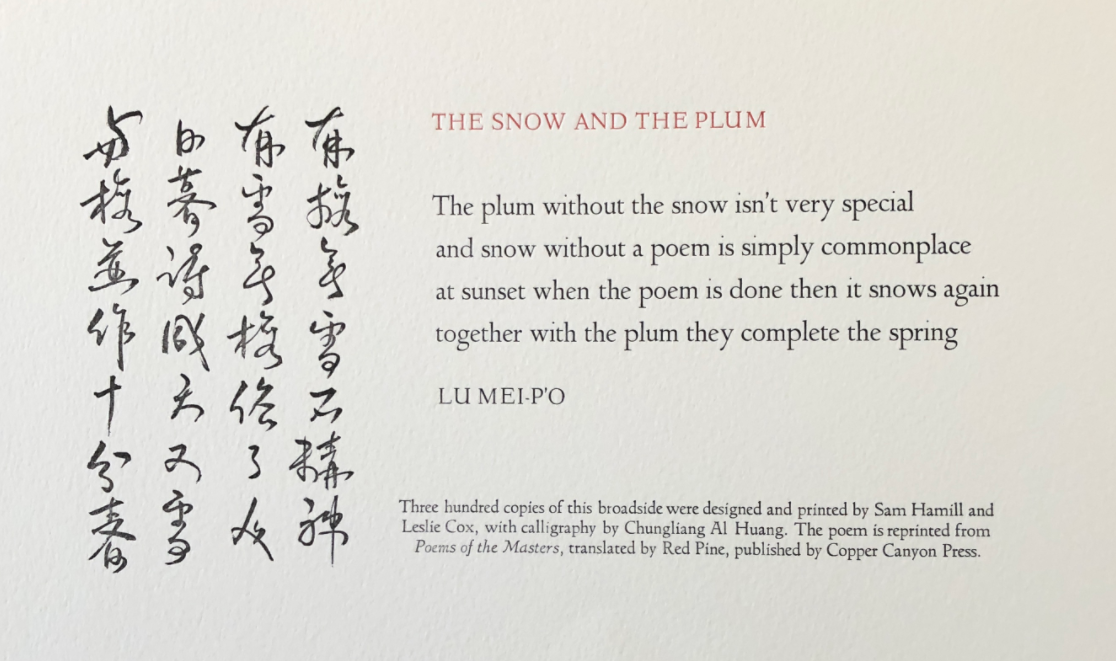
After lunch we moved outside and sat on the grass in a circle. My view from the circle faced Copper Canyon Press which has published poetry since 1972. I had already visited and picked up a collection of thousand-year-old Chinese poetry by Cold Mountain – a hermit sage who felt like a shaman to me. I also had a broadside of The Snow and The Plum by Lu Mei-P’o written down 800 years ago. Before today this was just a beautiful poem. Now it is a magical incantation by a poet turned shaman inviting us to celebrate our intimate connection to nature.
Photo by author
Workshop Day One Afternoon
Heather read us a passage by Angeles Arrien, who was one of her teachers, from the book Living in Gratitude: A Journey That Will Change Your Life.
“In many shamanic societies, if you came to a medicine person complaining of being disheartened, dispirited, or depressed, they would ask one of four questions: “When did you stop dancing? When did you stop singing? When did you stop being enchanted by stories? When did you stop being comforted by the sweet territory of silence?”
Gabrielle Roth
This foreshadows what will be coming for the rest of the workshop: singing, movement, storytelling, and silent contemplation.
More practices followed that first afternoon under a clear blue sky.
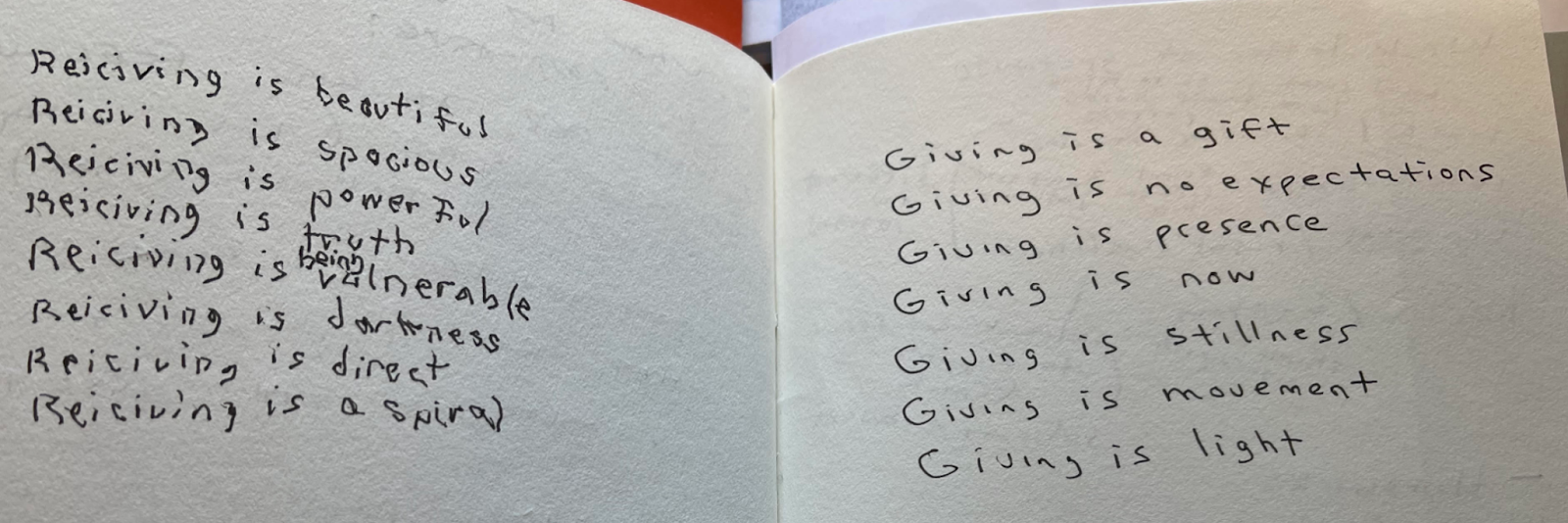
We opened our journals and filled in the blank for receiving is… with our non-dominant hand and then switched to our other hand to write giving is…
Photo by author
My responses to the prompts end up being open-ended pointers to further reflection. Some are direct opposites of each other. I have no idea why I wrote “Receiving is a spiral” but it hints at something hidden to explore.
The woods surround the institute on two sides. Through the woods are cliffs that are met by the Puget Sound. Port Townsend is on a peninsula. We are asked to take an oracle walk.
Photo by author
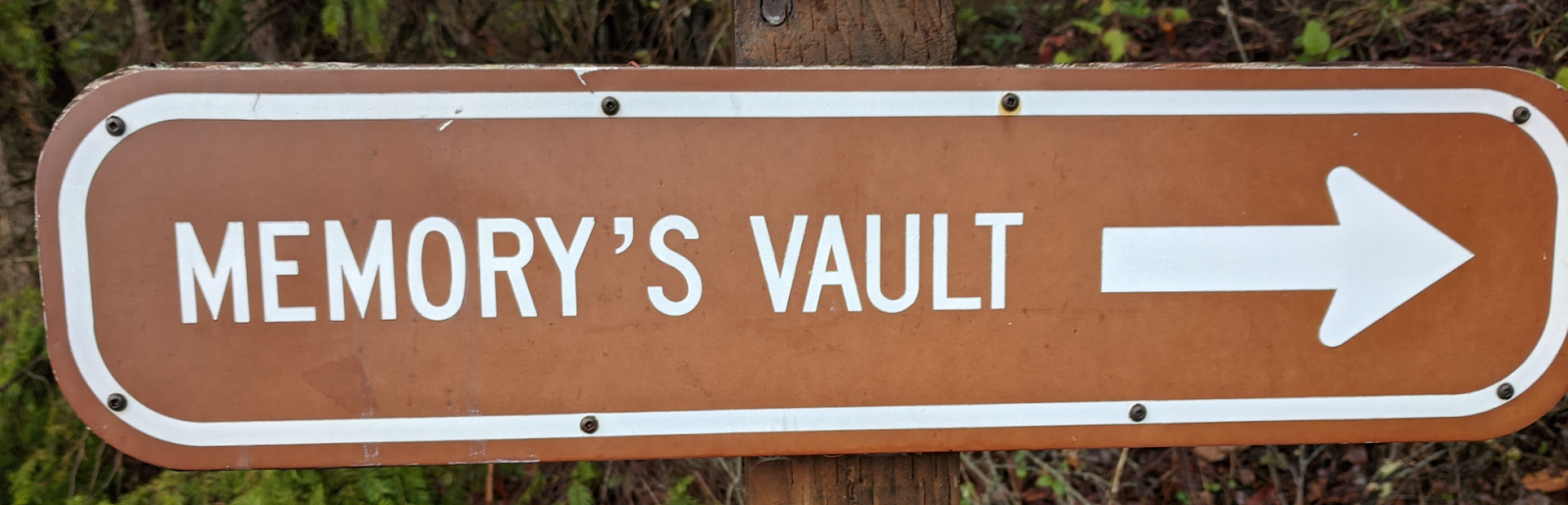
Holding a question in my heart I set off on a path into the woods. There are so many kinds of trees – I do not know the names of them all. I heard crows and warblers and see butterflies and ants. I recorded my observations instead of writing them down. I walked past a direction sign for Memory’s Vault and I imagined all the stories the plants have inside of them. I came out of the woods and my eyes were drawn to the horizon where water meets the sky. All during the walk, I said thanks to everything I met.
Back on the lawn I strung the phrases from my observations into an oracle – an answer to my question.
The circle reformed and we spoke about our oracle walks focusing on gratitude. This leads to identifying four teachers in our lives and writing a physical letter of gratitude to each one. As we wrote in silence, two hawks and an eagle flew overhead.
Dinner at Hanazono Asian Noodle
Photo by Lawrence Marcus
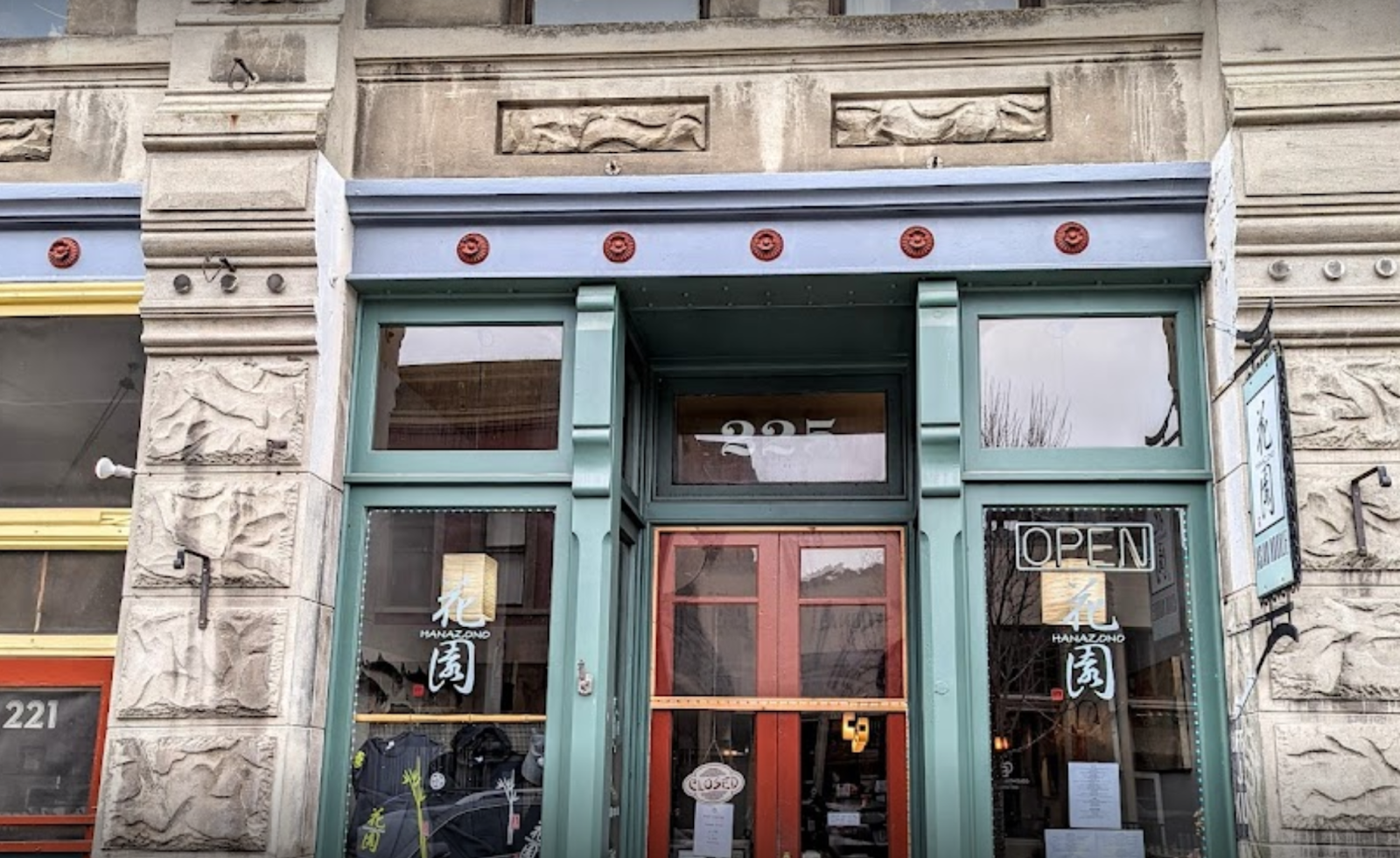
After the workshop, I had dinner with my brother downtown at Hanazono Asian Noodle. I thanked him for taking care of mom. My brother and I have lived separate lives and so it is nice to share a meal together. Caring for the family has brought us together.
At home, my mom can tell from my smile I had a wonderful day. We sat together on the couch holding hands. Outside the sliding glass door was a full moon in the sky.
Breakfast at the Food Coop
I woke up excited on Sunday. The scene outside the window has been replaced by a mother deer and her fawns nibbling at the leaves of a giant hedge. My brother arrived and I headed out for the second day.
Down the hill from my mom’s condo is the Food Coop – a local establishment since 1972. I picked up a breakfast burrito and a cup of Crack ‘O Dawn coffee from local roasters Sunrise Coffee Company. I added a sandwich and juice for lunch into a cloth tote from the store. There will be a potluck dinner so I picked up everything needed to make a killer salad – mixed greens, cherry tomatoes, carrots, cashews, an apple, and some lemons.
Workshop Day 2 Morning
Photo by author
The second day of the workshop, Sunday is outside of town at Heather’s home which is on several acres in the Cape George neighborhood which overlooks Discovery Bay.
Photo by author
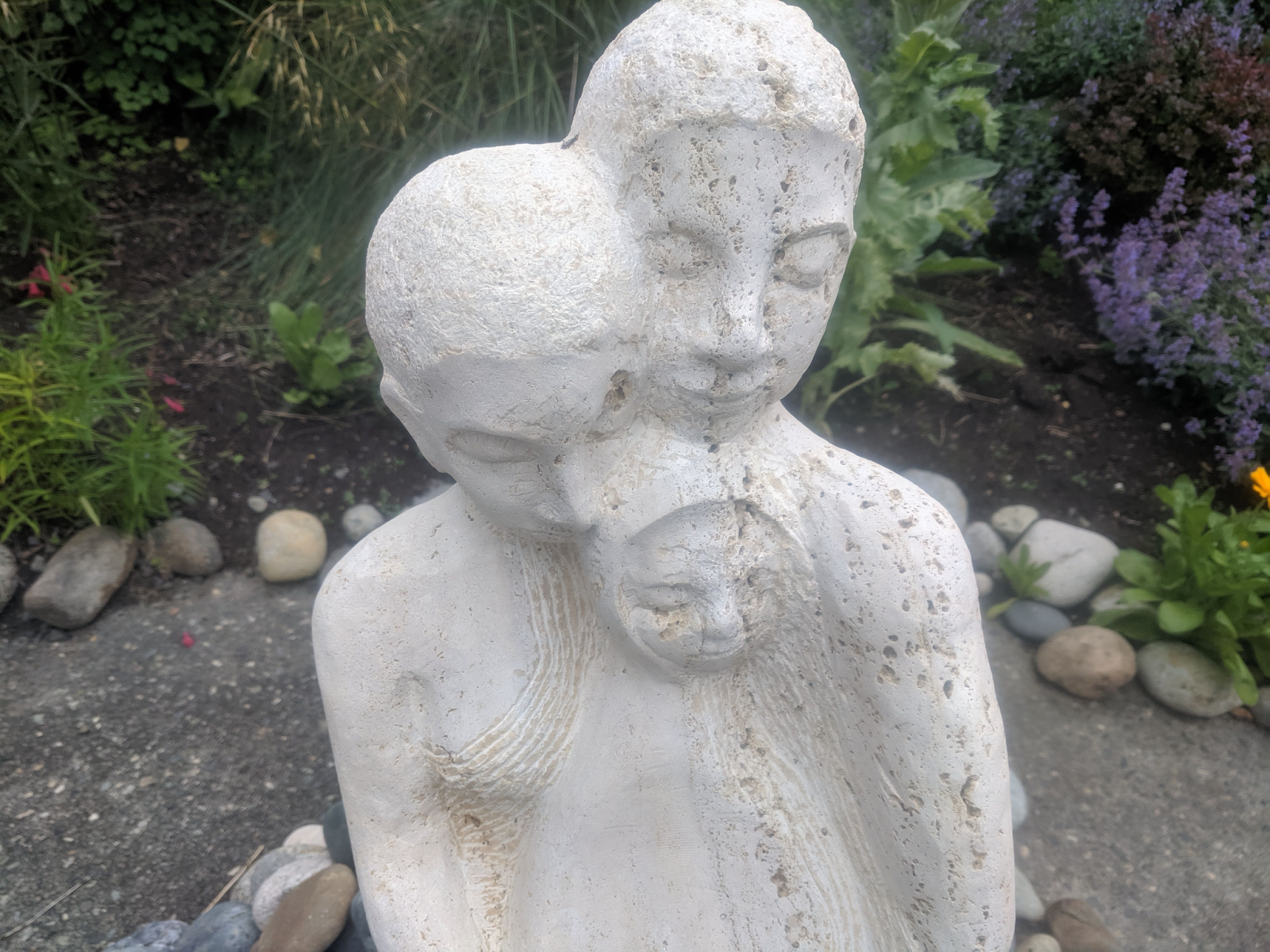
We gathered in a space that looks out onto a flower garden. In both room and garden are stone sculptures Heather carved. Not only does she teach yoga and shamanism, but she is also an accomplished artist! There are hoop drums (I later learned she and her husband made) and masks hanging on the walls. There is an altar that holds sacred and meaningful items – bronze statues of Hindu gods, rattles, photos of her teachers.
The morning started with learning a new song with the line “spiraling into the center, the center of the wheel.” I reflected back to yesterday when I wrote with my non-dominant hand “receiving is a spiral.” The spiral has always been an important shape I am drawn to – showing up in labyrinths and spider webs.
“The Spiral symbolizes the process of growth and evolution. It is a process of coming to the same point again and again, but at a different level, so that everything is seen in a new light. The result is a new perspective on issues, people and places… The life-renewing potential of the spiral appears in the spinning and weaving stories from all cultures.”
Angeles Arrien in Signs of Life
We flowed to a yoga routine and practiced more breathwork. I felt alert and relaxed.
We laid down for another shamanic journey. Both Heather and her husband Angelo drummed. We journeyed again to the lower world to be with our animal guide. Afterward we took a walk in nature. We were asked to reflect on what we received from the journey.
We sat together for lunch out on the patio overlooking the garden. We got to know each other more and talked about our experience in the workshop.
Workshop Day 2 Afternoon
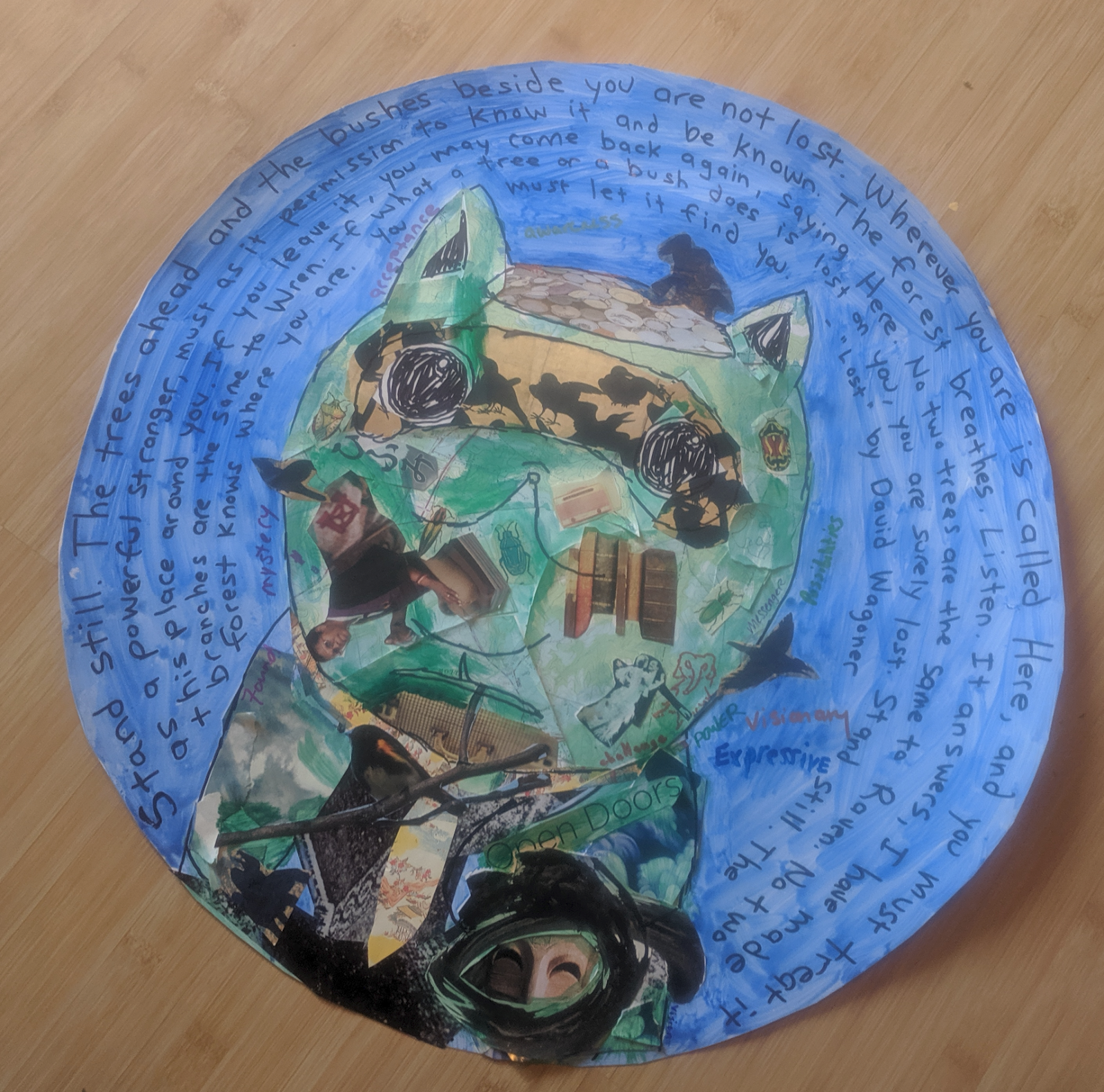
The entire afternoon was an art workshop. We worked with colored pens, watercolors, and stacks of magazines to create our spirit animal. We all started with a circular piece of paper.
Photo by author
I dove into the magazines finding images of birds, masks, plates, scarab beetles, a suitcase, a branch, a couple dancing, and even one of my Zen teachers, angel Kyodo Williams. I am attracted to all of these images. I found a topographical map mixed in with the magazines.
I drew an outline of my raccoon and began gluing images to the paper. I added watercolors. I found a poem that resonates deeply, Lost by David Wagoner, which I wrote onto the collage.
Stand still. The trees ahead and bushes beside you
Are not lost. Wherever you are is called Here,
And you must treat it as a powerful stranger,
Must ask permission to know it and be known.
The forest breathes. Listen. It answers,
I have made this place around you.
If you leave it, you may come back again, saying Here.
No two trees are the same to Raven.
No two branches are the same to Wren.
If what a tree or a bush does is lost on you,
You are surely lost. Stand still. The forest knows
Where you are. You must let it find you.
Early evening we placed the completed images in a circle. We moved around the circle using a pen to add a single word. The raccoon received: mystery, visionary, expressive, power, possibilities, messenger, challenge, awareness, and found.
Heather and Angelo, photo by author
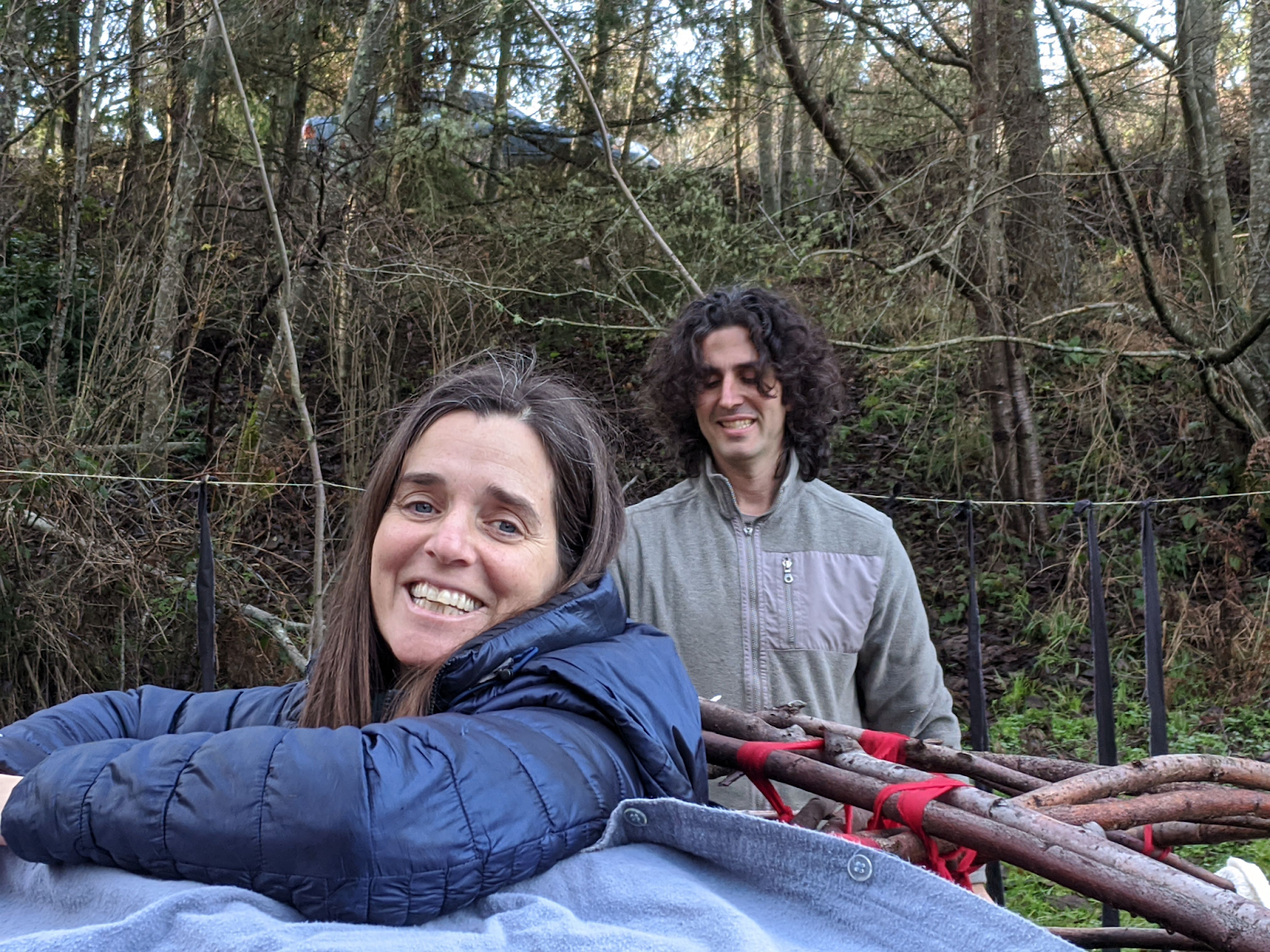
The final event of the workshop before the potluck was a sweat lodge. Angelo had prepared a fire and heated the rocks. The lodge is only branches tied together in an inverted basket shape. Dressed in shorts and swimsuits we add blankets until the lodge is ready.
Before entering the lodge we were smudged with sage, the smoke brushed over our body by an eagle feather. Bowing to enter we arranged ourselves around the pit in the middle. Angelo asked if I will help with the heated stones. He passed them on the tines of a garden fork and I placed them in the pit with two deer antlers. Once completed Angelo entered and the door flap was closed.
We sang songs and offered prayers as sage and water were placed on the rocks. The steam from the rocks and our voices transformed the space.
I felt held and seen. I felt a connection with those in the lodge, my ancestors, and the earth.
Potluck Dinner
After wiping sweat off our bodies with towels we got dressed and made our way into the house for dinner. Casseroles were heated in the oven, two of us assembled salads, and we discovered many people had brought dessert – apple pie, berry pie, pecan pie, dried fruit, and fruit salad.
We enjoyed our time together eating and chatting. There was a cat who loved chasing a piece of yarn.
I drove home to my brother who is still with our mom. He took off to sleep and I helped my mom get to bed. The full moon was still in the sky. I sat up for a while watching the moon and enjoying the silence.
I had my first experience of shamanism – the drum journey, the oracle walk, the sweat lodge – integrated with other practices. I wanted to do more of this. Three domains mixed together I had seen as separate – yoga, shamanism, and art.
“The answer to having a better life is not about getting a better life, it’s just about changing how we see the one we have right now.”
angel Kyodo Williams
The Reverend angel’s words came to me as I looked at the collage I had made. Shamanism will not get me a better life, but it will help me get perspective. The spiral will help me get perspective. I am not lost. I am here. Here.
Coining a term like FOMO can be challenging. How do I come up with a new word? My rational thinking above ground mind is not going to be useful. Taking a breath and surrendering to my intuition a single word appears.
Play.
At first this play is conscious, maybe even a bit forced. I am still above ground. The underground awaits. The underground awaits us.
Let’s play.
Hearing this refrain may leave you asking, “How?”
Reflecting on my childhood, make-believe jumps out as the answer. I put out my thumb. I am going to hitchhike into my subconscious, into the underground.
Getting a haircut during Write of Passage, a cohort based online writing course, may be the most brilliant thing I ever did. Reactions vary from “Looking sharp dude” to “I am still getting used to this new you.”
“There is a story there in your hair cut,” one woman says.
I immediately think – hair story. People’s reaction to your haircut. Your own reaction to your haircut. A story of perception. Stories of embarrassment and empowerment.
I bring this coined term to the Feedback Gym. Working in pairs we silently read each other’s essay and then give spoken feedback. I am paired with gym runner Michael Dean. He is exploring the term newsletter junkyard, a folder where he files everyone’s newsletter. His piece is filled with playful language – slang parrots, corporate hucksters, escalatory robots.
This playfulness leads to hair story collapsing into hairstory. The individual story of hair shifts to the collective story of hair. As in American Hairstory or WWII Hairstory. The history of anything told through hair.
Sketch and words by author
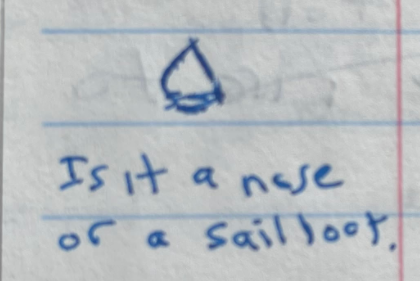
During the silent hour of the Writing Gym I was doodling. I have doodled more since a writing mentor asked us at the beginning of the session to draw our faces without looking at the paper. Looking at a small triangle shape I wonder if it is a nose or a sailboat. It’s a noseboat of course! I write:
Is it a nose or a sailboat? Oh, it’s a noseboat of course. The smell of the sea. The smell of travel. Travel begins with the senses. The nose leads the way.
Slowly out of my mind tumble grumple doors (a sound play on Gryffindor from the Harry Potter books), niggle noors (no idea) and button drawers. And something is unleashed. I dub it the Dean effect or being in the Dean field, after Michael Dean.
A flash of memory comes. I am sitting with a friend in his pale blue 1971 MG-B in the high school parking lot. We joke that from this point forward no matter what happens in our life we will always be in this car in this parking lot.
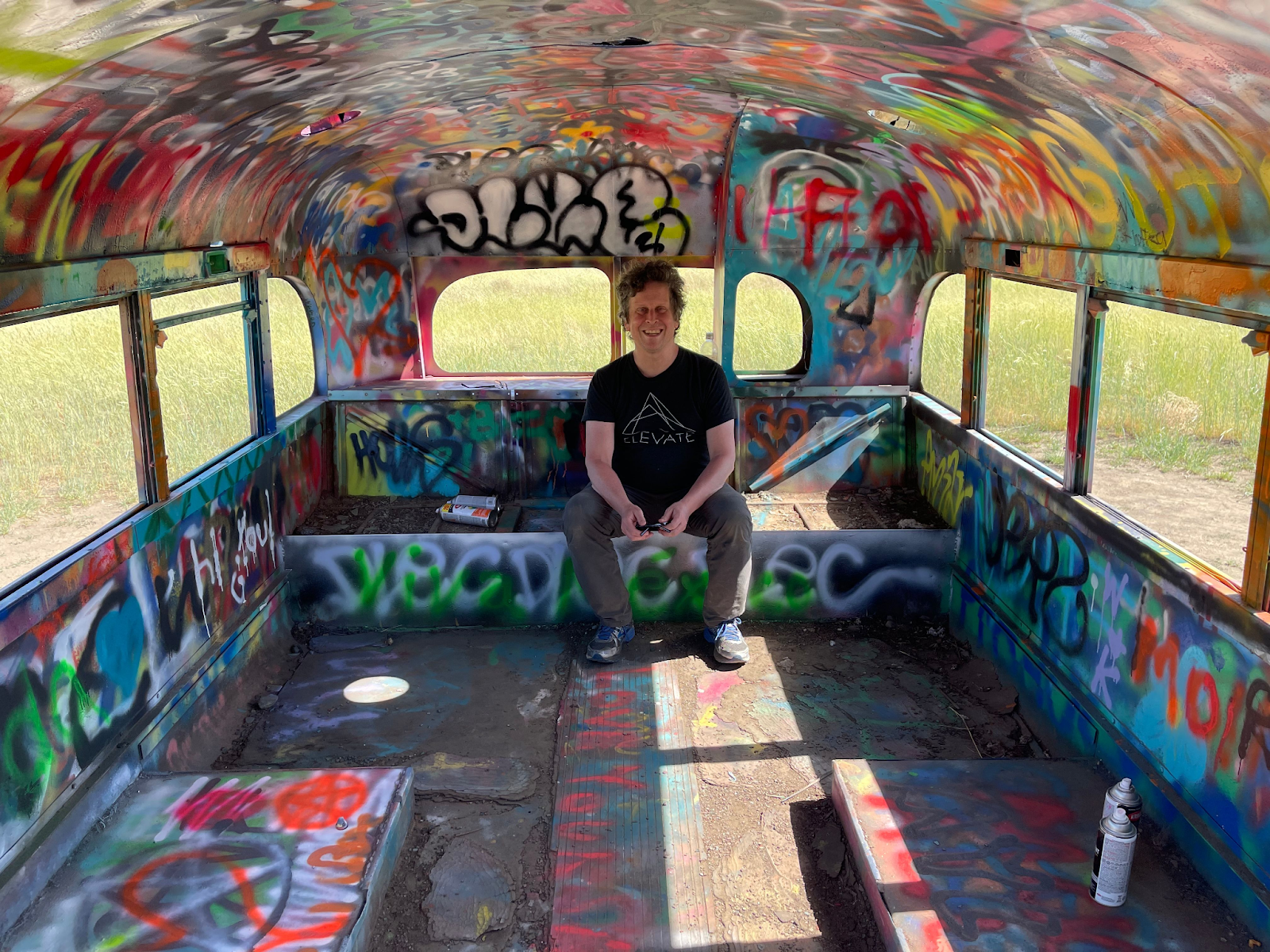
Photo taken by Crow
I realize my hitchhiking in the underground started inside the MG-B, but as the make-believe becomes real I find myself on a bus.
There is more room now.
The inside of the bus is covered in graffiti. The walls, the floor, the ceiling are covered in words – coined terms.
“Imagination is more important than knowledge.”
Albert Einstein
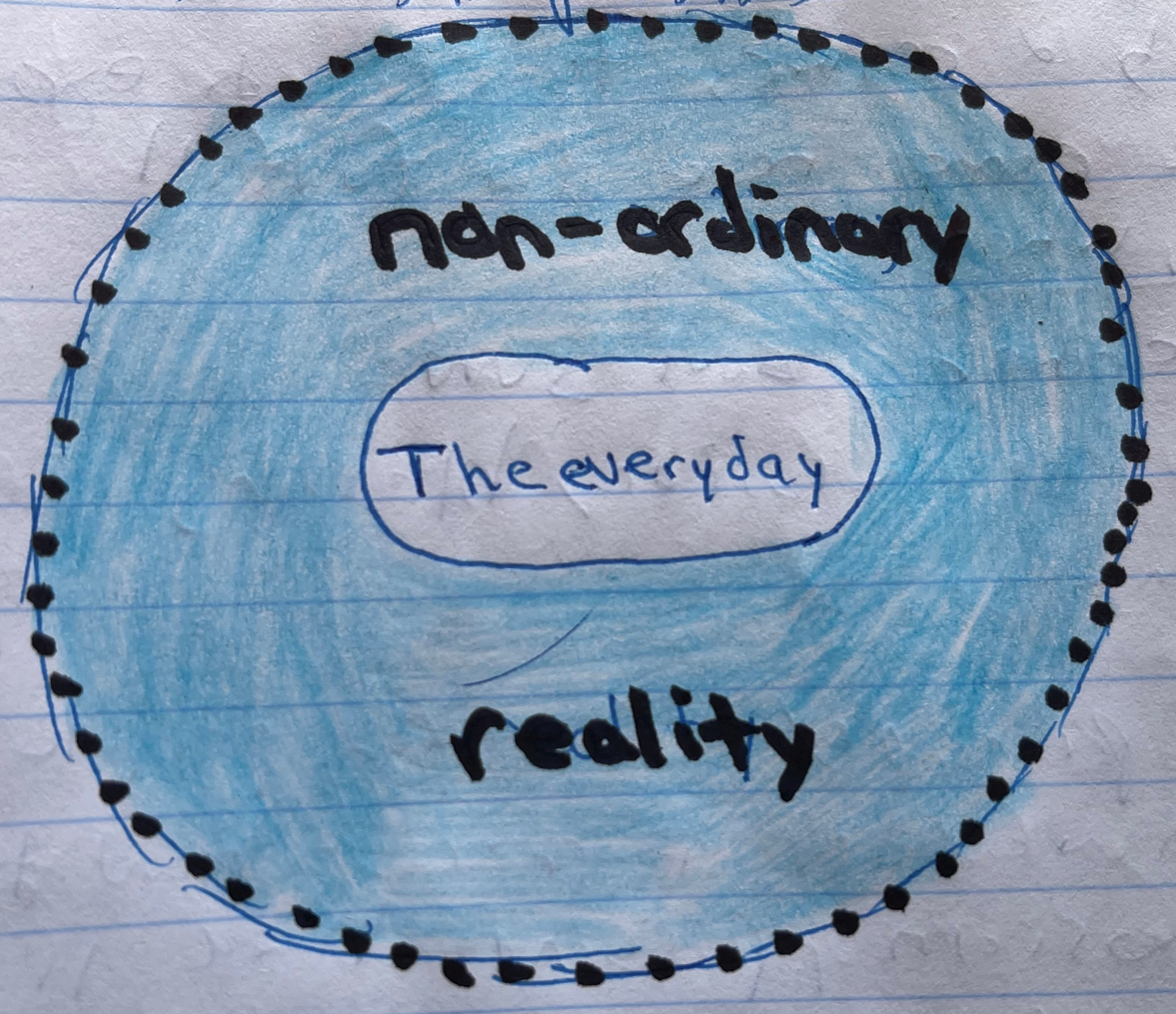
This is not real in an everyday sense. And yet it is. Everyday reality is inside a larger non-ordinary reality. I surrender and release to mystery. I am not merely stepping sideways into a daydream. I am walking into that which surrounds and sustains us.
Sketch by author
Looking at the walls of the bus I start writing a list of coined terms.
“I am making shit up. Words hop, skip, and jump. They rhyme, they don’t rhyme. Mind zip zap zops. I make doodles and oodles. I giggle. I frown. I play.”
Shirley Rivera
I combine something from nature with another term and get tree consciousness, wave thoughts, sun dreams, and water poems.
I switch to animals and get cat tea and bird leash.
I love books and looking at the stars and thus bookstronomy is born.
A relative is off to have a colonoscopy and I am sitting in my library. I become sillier and arrive at colophonic. Yes, a book colophon combined with a colonic for a colonoscopy.
The coined phrases fall off the wall onto the journal page almost faster than I can write.
The list continues with lawn showers, golden hours become purple hours which tease at rainbow hours, blue sours, lost ours (a play on lost hours and lost intimacy), abundance aversion and loss attraction (playing with opposites), JODE (joy of doing everything), JOJO (joy of jumping out/off), phonehenge (a time in the far future when archaeologists wonder what cell phones are), the cook’s cookies, and the writer’s eraser.
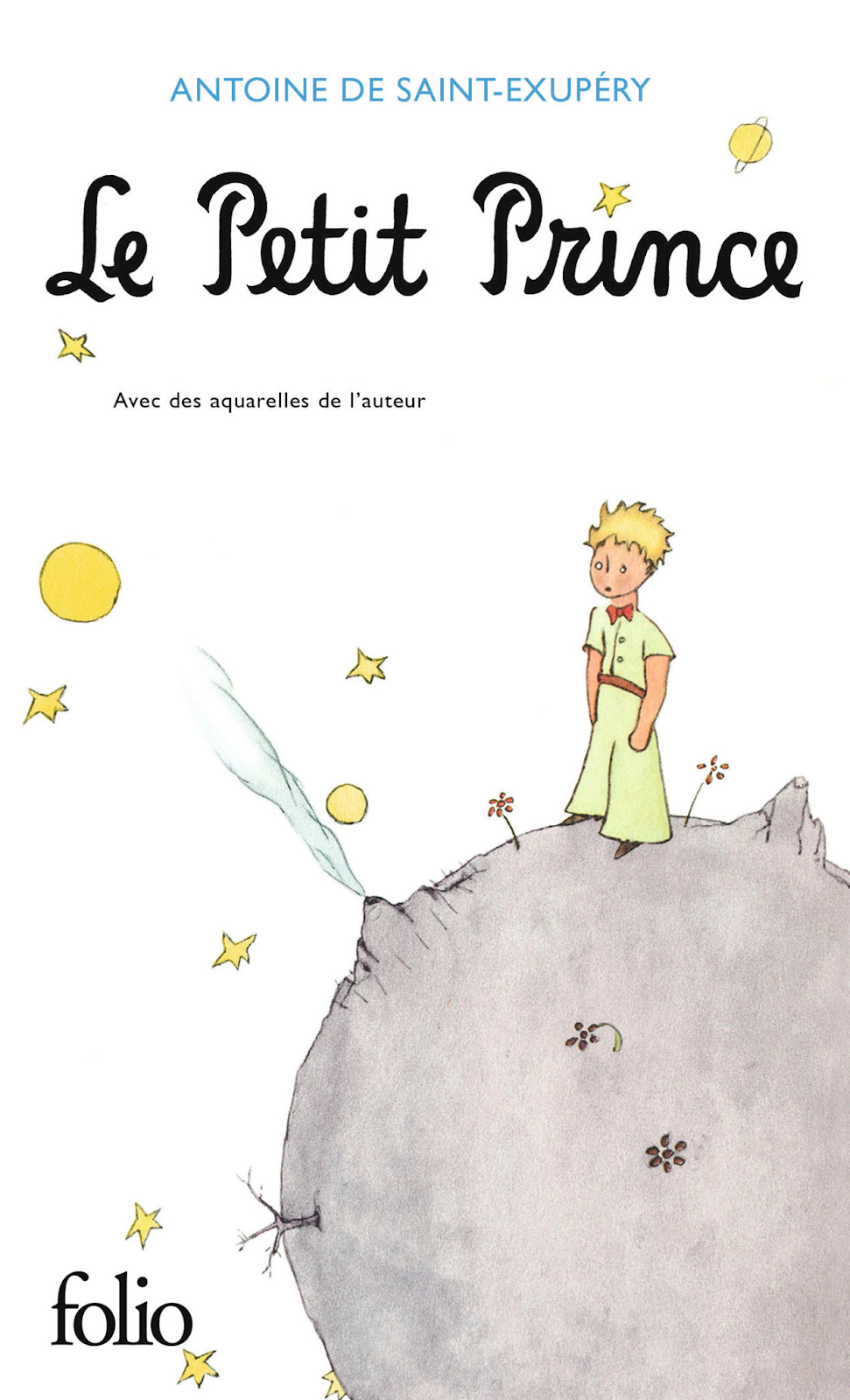
Artwork by Antoine de Saint-Exupéry, water color, 1940
In a mentor session I am asked to find the essence in my essay, the shiny dime. Focus on the shiny dime and the emotion it evokes. When I arrive at the feeling, I may also arrive at my coined term. I reverse engineer since I already have a list of terms. Picking bookstronomy I write:
The Little Prince, sailing on a sea of stars, pulls out his telescope and looks down through the seaweed to see an underwater palace of books. The Little Prince has always loved stars and books.
During the same mentor session, I am in a breakout room where fellow students are struggling to come up with a single coined term. I suggest playing around and read some of mine.
This sparks a new way of playing.
Make up something using a last name. What about the Tillotson Effect or the Pimental Pivot? Or use someone famous – the Feynman Hypothesis, which is something about how the 12 Favorite Problems work.
You can get snarky. “Oh he is so DKC.” There is the Dunning-Kruger Effect, where a person who knows little about a subject feels really knowledgeable. DKC is Dunning-Kruger Confidence. A false confidence where the person is full of hot air.
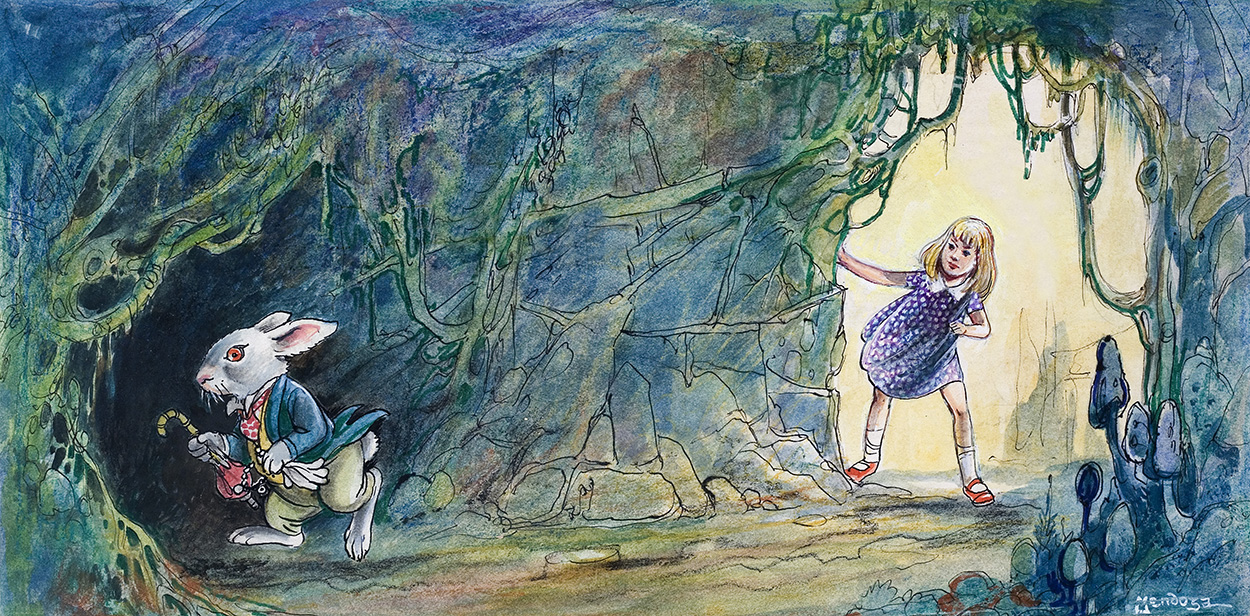
Artwork by Philip Mendoza, watercolor, 1966
This playful mood infuses my day. Like Alice following the rabbit underground I find myself in an amusing, creative and topsy-turvy space where I am hitchhiking in the underground. Catching a ride into my subconscious. Riding the rails of non-ordinary reality.
I arrive at an underground river where I must pay the ferryman to cross. I offer a coined term and step aboard. Looking up I see the Little Prince looking down through a telescope.




 Epic Ken Rice